
Photographing
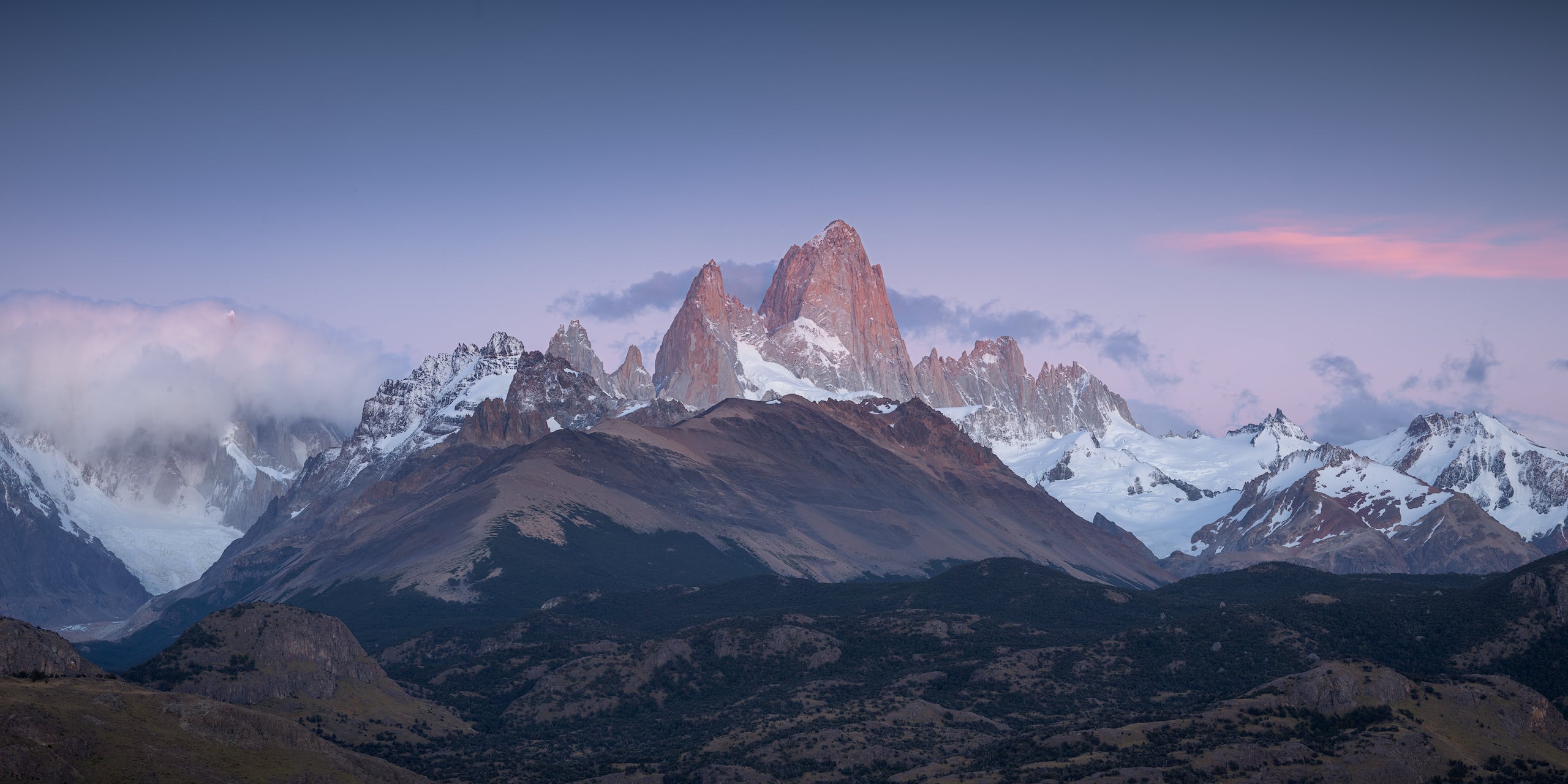
Mirador de los Cóndores sits on a hill directly above El Chaltén, with an unobstructed north-facing view of the full Fitz Roy massif — every peak from Cerro Torre on the left to Fitz Roy at centre and the lesser summits beyond, the town visible below. This is not a foreground-led location: no boulders, no shoreline, no classic wide-angle foreground element. Medium and telephoto focal lengths work best — the subject is the massif across the valley, not the ridge itself. This guide covers the view, when the light works, and how to reach the mirador before dawn.
What to photograph at Mirador de los Cóndores
The view is north-west, toward the Fitz Roy massif. From this viewpoint, the range stretches across the skyline — El Chaltén is visible in the valley below. The breadth is real, but the view has its limits: Cerro Torre sits partly behind a ridge from this angle, and a foreground hill blocks part of Fitz Roy’s east facing glaciers. What the mirador offers is an elevated overview of the massif — wide, accessible, and oriented toward the whole range rather than its most dramatic individual features.
Foreground options
The ridge offers some movement, but framings don’t change significantly as you walk it. This is not a location where repositioning transforms the shot. What matters is the quality of the light on the peaks, not a new foreground angle. Medium and telephoto focal lengths deliver the most useful frames. A longer lens isolates individual summits or the summit snow and rock detail. Wider focal lengths that include El Chaltén and the valley below work as context frames — the town provides scale and a sense of the massif’s relationship to the landscape, but it sits at an awkward position to work as compelling foreground.
Best time to photograph Mirador de los Cóndores
The primary reason to be at Mirador de los Cóndores before dawn is sunrise. Alpenglow arrives in the seconds before the sun clears the horizon — the granite peaks turn red while the valley below is still in darkness. The moment lasts seconds, not minutes, and it requires nothing more than a clear horizon. Be in position early.
After alpenglow, the light develops on the massif while the valley remains in shadow. The contrast between lit granite above and the dark valley below can make for an productive early-morning period at this viewpoint — worth staying for, even if the alpenglow itself doesn’t arrive.
Autumn and winter bring more oblique light to the massif from this angle. The lower sun sculpts the rock faces across the full range rather than washing them evenly from the front. The directional shift matters across the entire skyline — the same advantage that other viewpoints around El Chaltén benefit from, felt here across the full breadth of the range.
- Nearest base
- El Chaltén
- Walking distance
- 2km one way
- Coordinates
- 49.3385° S, 72.8785° W
Nearby Photography Locations
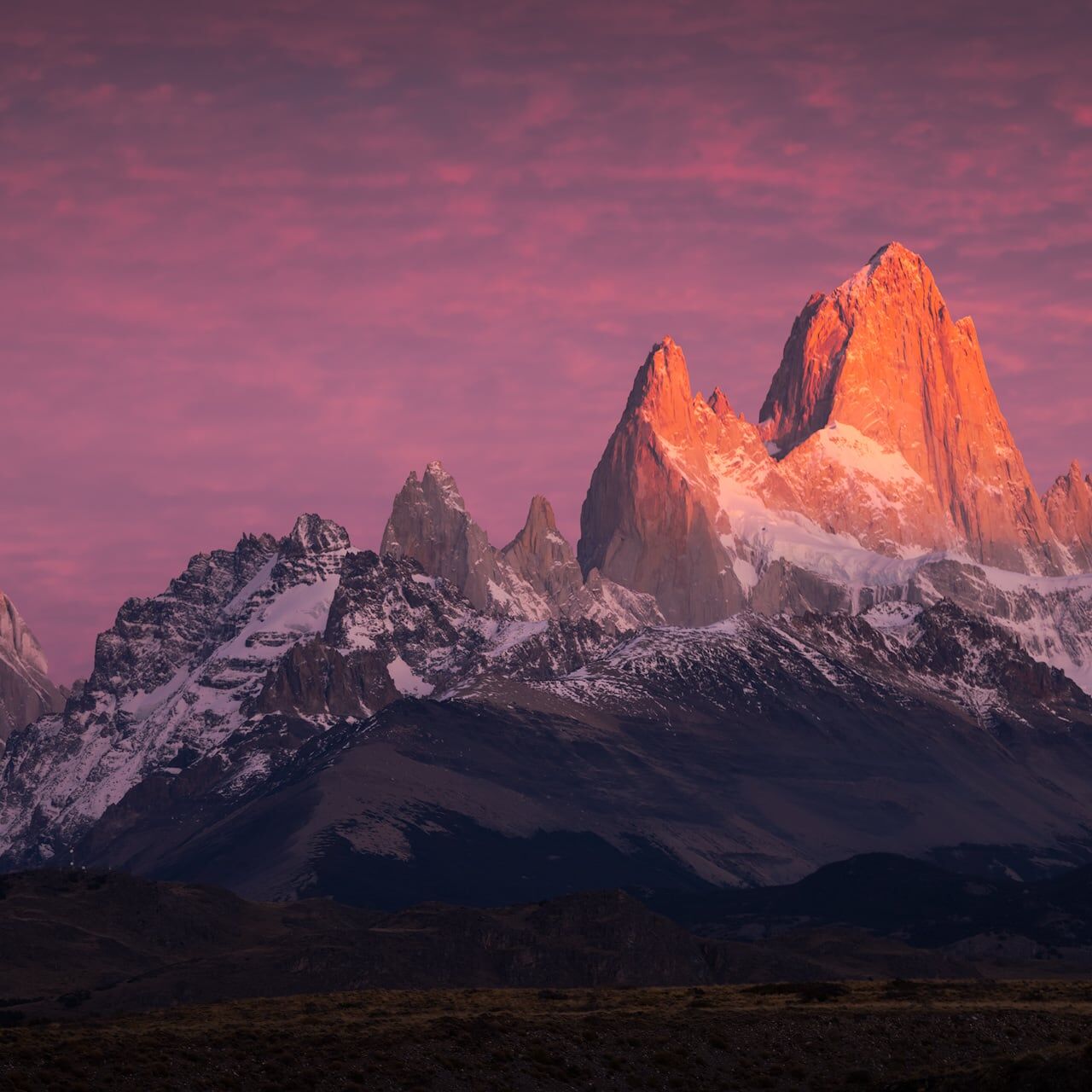
Parque Nacional Los Glaciares stretches across the southern edge of the Patagonian Andes — from the granite towers of El Chaltén in the north to the advancing ice of Perito Moreno in the south. For landscape photographers, the park offers one of the most concentrated collections of mountain and glacial viewpoints in the world. These are the most popular locations for photography.
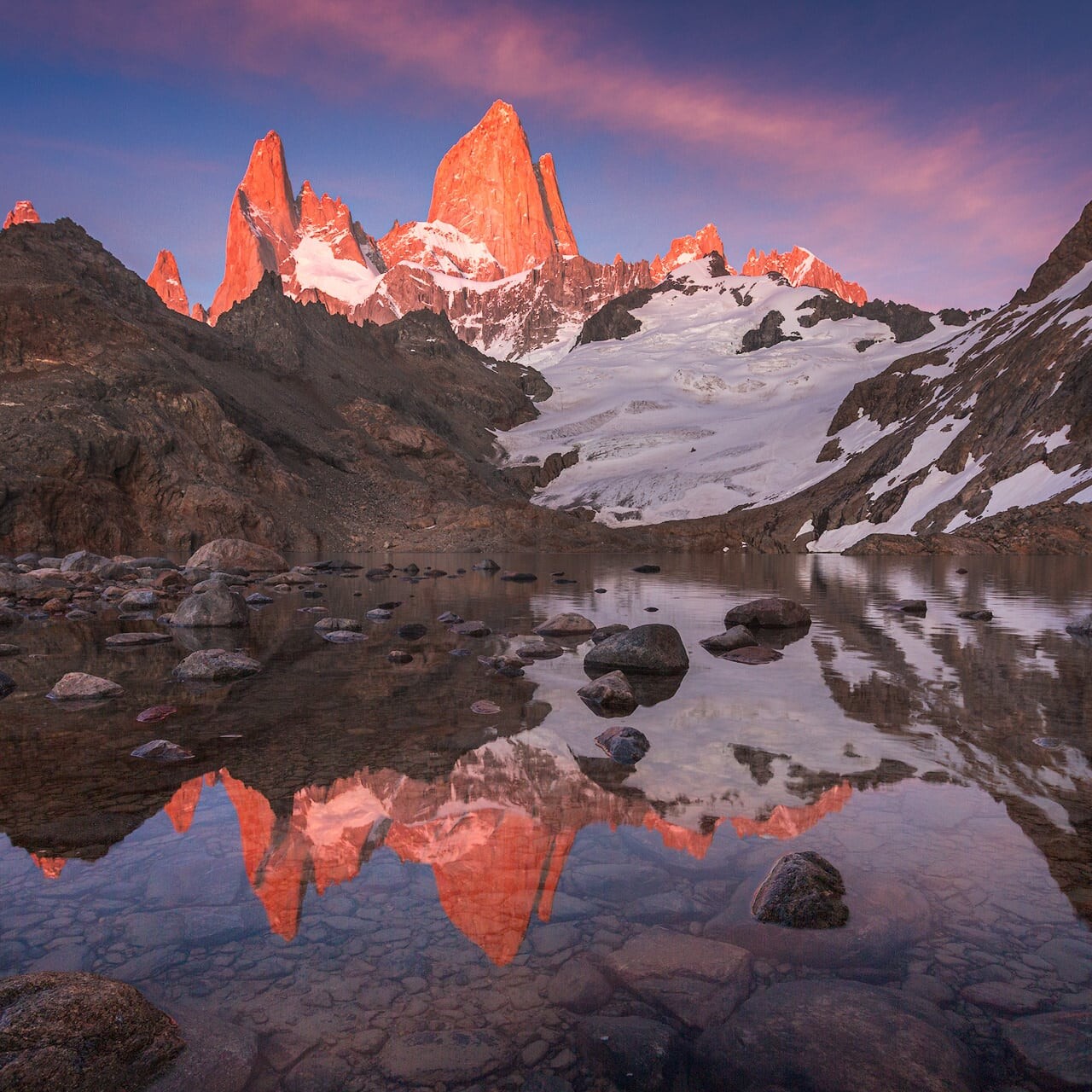
Standing at 1,170 metres in the mountains above El Chaltén, Laguna de los Tres sits directly beneath the east face of Fitz Roy — a position that makes it one of the most photographically powerful viewpoints in the southern hemisphere. The lake is small, and in calm conditions can hold a near-perfect sunrise reflection of the granite towers above. This is where serious landscape photographers come to Patagonia to be.
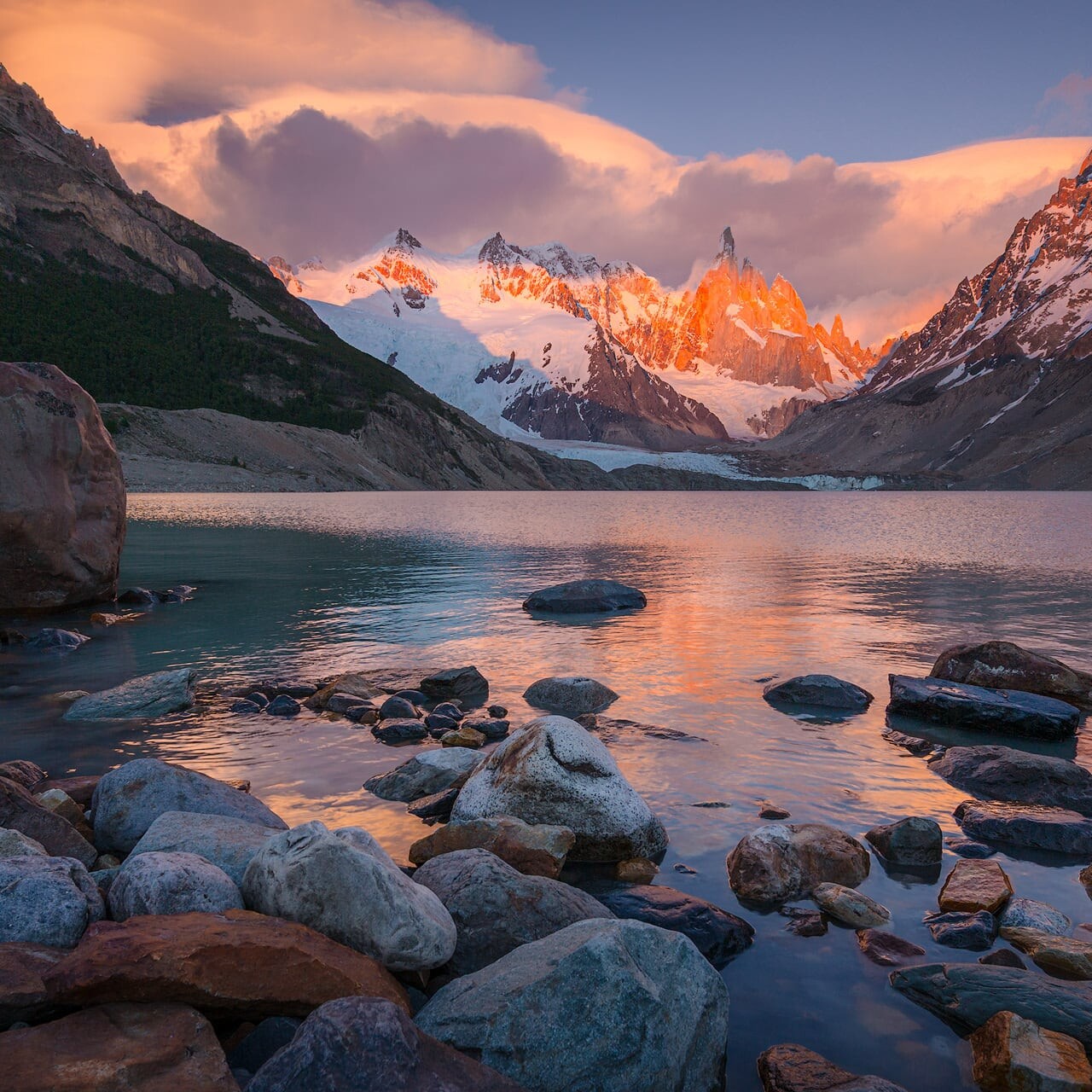
Laguna Torre is the closest you can get to Cerro Torre without a climbing permit or mountaineering equipment — a glacial lake at the foot of one of the most dramatic granite spires on Earth. The mountain rises directly above the glacier at the far end of the lake, placing the photographer in a perfect position to shoot sunrise. For anyone drawn to Cerro Torre, this is as close as you get.
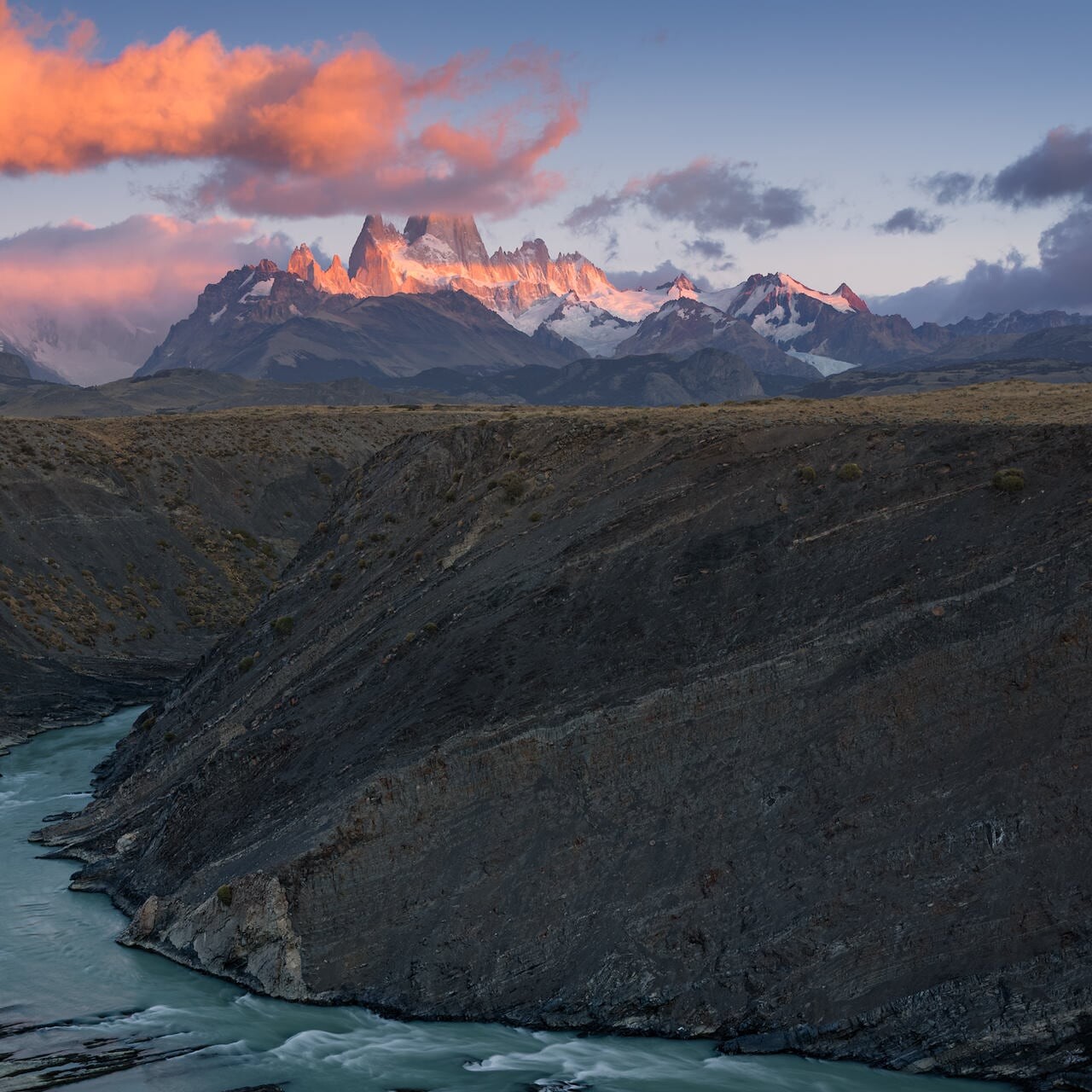
Most viewpoints around El Chaltén offer closeness — the granite filling the frame, the glacier detail sharp, the scale overwhelming. The Cañadón del Río de las Vueltas offers the opposite: a step back, the full Fitz Roy Range in a single frame, and the wide Patagonian sky above. Cerro Torre on the left, Fitz Roy at the centre, every peak and spire between them. From the canyon rim, El Chaltén sits far below — this is the widest accessible view of the massif.
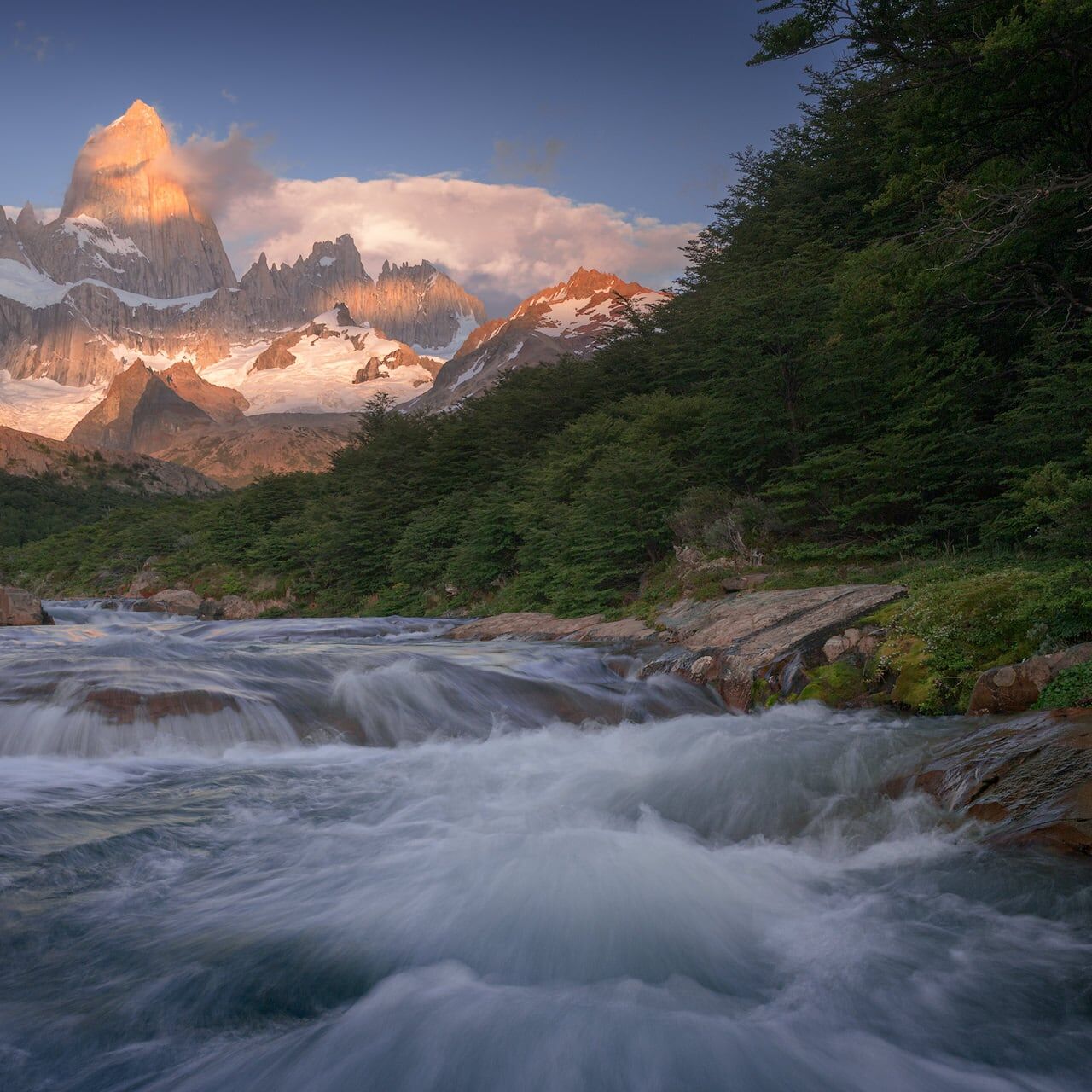
Arroyo del Salto meets the Laguna de los Tres trail approximately 1.5 hours above El Chaltén — a series of rapids and small cascades with Fitz Roy's east face rising directly above. The river works as a leading line from most positions along the bank or within the water itself; the composition shifts with every rock you choose as a base. This is the most versatile water-foreground location on the Fitz Roy trail.