
Overview
Cerro Torre, one of the many jagged peaks of the southern Patagonian Andes, is an imposing granite spire that rises to an altitude of 3,128 meters. Its distinctive shape not only makes it stand out in the surrounding landscape but also qualifies it as one of the most striking peaks on Earth. Cerro Torre’s beauty and sheer vertical walls have drawn adventurers and climbers for decades. While early expeditions to the mountain were long and arduous, today the nearby town of El Chaltén offers a comfortable hub for trekkers, climbers, and explorers.
Located in Parque Nacional Los Glaciares in Patagonia, Cerro Torre stands on the eastern edge of the Southern Patagonian Icefield, straddling the disputed border between Argentina and Chile. It is the highest peak in a chain of four mountains: Cerro Torre, Torre Egger, Punta Heron, and Cerro Standhart. The mountain’s icy west face slopes down toward the Circo de los Altares and the glaciers of the Southern Patagonian Icefield. Its striking east face drops almost vertically into Torre Valley, where it faces the west face of nearby Fitz Roy. The summit is crowned by a mushroom of rime ice, formed by strong winds that carry humid air from the Pacific in the west. These westerly winds influence the unpredictable and often unforgiving weather in the area.
The first written description of Cerro Torre was made in 1782 by Spanish explorer Antonio de Viedma, who saw the mountain only from a distance. However, de Viedma was not the first human to behold Cerro Torre. For centuries, the vast plains east of the mountain were inhabited by the Aonikenk (or Tehuelche) people, nomadic tribes whose sacred mountains inspired numerous of their legends about gods and mighty peaks. Near the end of the 19th century, the famous explorer and geographer Francisco “Perito” Moreno named the peak during one of his surveys in southern Patagonia.

Cerro Torre
Quick Info
Cerro Torre is an impressive granite needle rising from the Southern Patagonian Icefield — one of the most striking and technically formidable peaks on Earth. It sits within Parque Nacional Los Glaciares on the Argentina–Chile border, surrounded by glaciers, wild rivers, and the lenga forests of El Chaltén.
Facts
- Height: 3,128m / 10,262ft
- Mountain Range: Andes
- First Ascent: 1974
Location
- Country: Argentina/Chile
- Nearest Town: El Chaltén
- Nearest Airport: El Calafate (FTE)
Cerro Torre
On the Map
- GPS: 49°17'26.5776'' S / 73°5'50.2908'' W
- Lat/Long: -49.290716, -73.097303
Additional Information:
Climbing History
Cerro Torre’s climbing history is as dramatic as its granite walls — marked by legendary attempts, bitter controversies, and some of alpinism’s greatest debates.
For a long time, the peak was regarded as one of the last great unclimbed challenges in the world, and early attempts to scale Cerro Torre were met with failure. In 1952, an expedition led by French climbers Guido Magnone and Lionel Terray made history by summiting nearby Fitz Roy. But Cerro Torre, standing even more defiantly against the sky, remained unconquered. Terray famously described it as an “impossible mountain,” reflecting the extreme difficulty posed by its sheer granite faces and volatile weather. A few years later, in 1958, an Italian team led by Walter Bonatti planned an ascent but was ultimately forced to abandon their attempt — they didn’t even make it halfway up the mountain.
Early failures cemented Cerro Torre’s reputation as one of the world’s most formidable peaks. But what followed was more than just a battle against ice and stone — soon it became a battle over truth itself.
Controversies
The idea of standing atop Cerro Torre’s summit became an obsession for the world’s elite climbers, a prize so alluring that some were willing to risk everything for it. And in this relentless pursuit, ambition and truth would soon collide in one of the most contentious chapters in mountaineering history.
The biggest Hoax in the history of climbing?
The first claimed ascent by Italian climber Cesare Maestri in 1959 remains one of the most controversial in mountaineering history, due in no small part to a complete absence of physical evidence. Maestri set out to conquer Cerro Torre alongside fellow Italian Cesarino Fava and Austrian climber Toni Egger. According to Maestri, he and Egger reached the summit on January 31st, but on the descent, Egger was tragically swept away by an avalanche, taking their camera — and the only photographic proof of their success — with him. Maestri barely survived the ordeal, but after being found almost buried in the snow by Fava, he declared with unwavering certainty that they had reached the summit.
His account was soon met with doubt and skepticism, and to this day, no physical evidence of their ascent has ever been found. Yet, until his death in 2021, Maestri never wavered in his claim.
The Compressor Route
In 1970, fueled by anger, Maestri returned. He and his team used a gasoline-powered compressor drill to bolt their way up the Southeast Ridge — creating the infamous “Compressor Route.” During his 54-day-long assault on the mountain, Maestri placed more than 400 bolts and ladders to aid his ascent, yet upon reaching the summit ridge he refused to climb the final ice mushroom, dismissing it as an impermanent feature that did not constitute the true summit. The climbing community was appalled, with many seeing his methods as an attempt to dominate the mountain rather than climb it.
Put on your boots and get going. If you’ve got a companion, take a rope with you and a couple of pitons for your belays, but nothing else. I’m already on my way, ready for anything – even for retreat, if I meet the impossible. I’m not going to be killing any dragons, but if anyone wants to come with me, we’ll go to the top together on the routes we can do without branding ourselves murderers.
Reinhold Messner in “The Murder of the Impossible”, Mountain #15, 1971
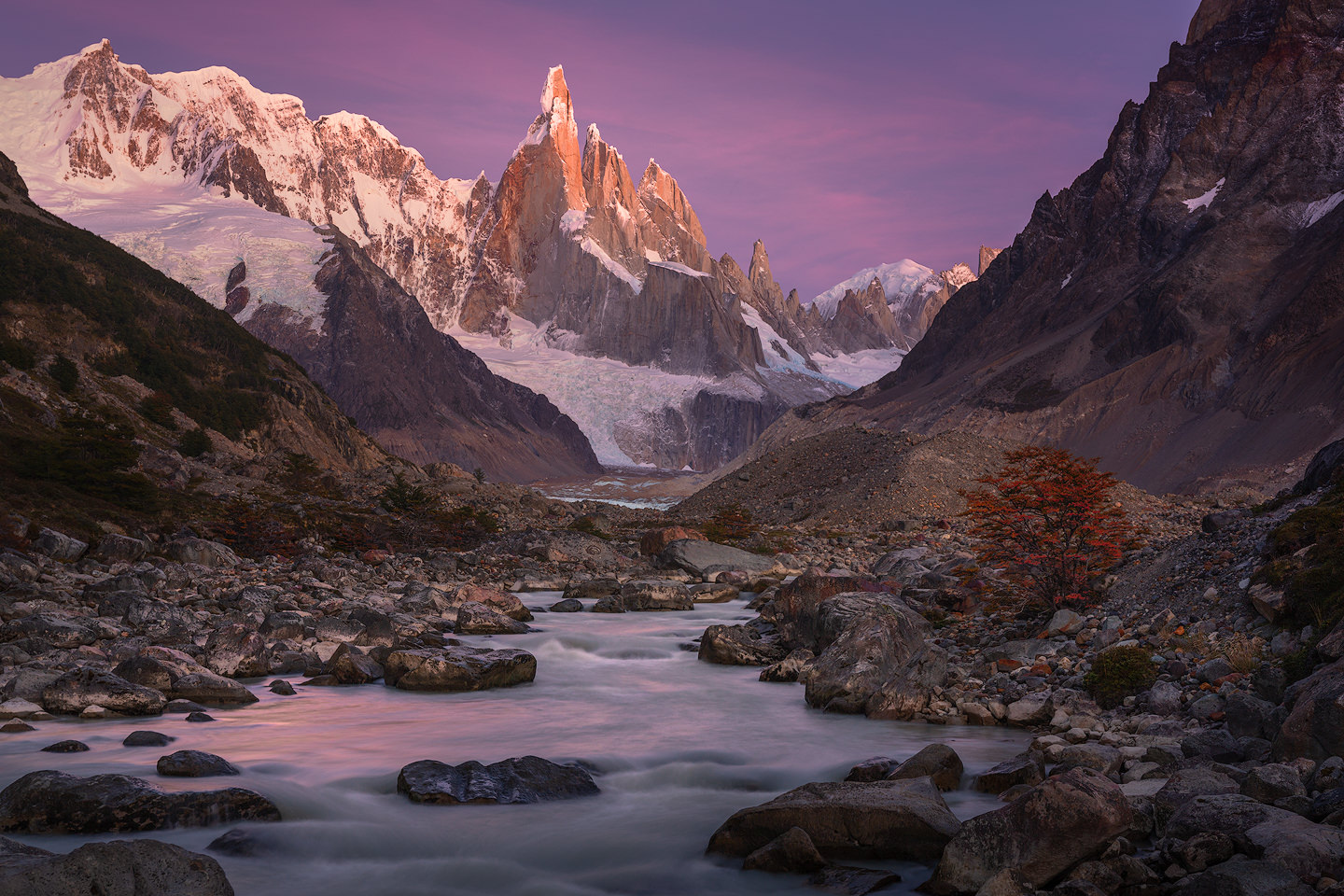
The bolts and the questions they raised would haunt Cerro Torre for decades: in 2012, American climber Hayden Kennedy and Canadian Jason Kruk made the first ‘fair means’ ascent of the Southeast Ridge and, on their descent, removed many of Maestri’s bolts — an act celebrated by some as a restoration of the mountain’s integrity, condemned by others as the erasure of history.
First Ascent
Despite the years of controversy and Maestri’s contested claims, Cerro Torre remained an untamed prize, waiting for a true ascent. In 1974, an Italian team led by Casimiro Ferrari set out to accomplish what no one had yet done—reach the true summit of Cerro Torre without controversy. Their chosen route: the West Face, a line of ice-choked gullies and sheer rock that had never been climbed. Unlike Maestri’s bolt-heavy siege, Ferrari and his team committed to a traditional alpine approach, relying on their skill, endurance, and the mountain’s natural features rather than excessive fixed protection.
The ascent was grueling. Patagonia’s notorious weather battered the team with relentless storms, forcing them to retreat multiple times. Days of waiting in freezing conditions tested their patience and resolve. Yet, when a brief window of opportunity finally appeared, Ferrari, along with Daniele Chiappa, Mario Conti, and Pino Negri, launched their summit push. Climbing through a labyrinth of vertical ice formations, they overcame treacherous conditions and, on January 13, 1974, stood atop Cerro Torre—its unmistakable ice mushroom beneath their feet.
Their achievement was undeniable. They had reached the true summit by fair means, cementing their place in mountaineering history. While the debates surrounding Cerro Torre would continue for decades, Ferrari’s ascent marked the moment when the mountain was finally, unquestionably conquered.
Trekking
While summiting Cerro Torre is reserved for experienced climbers, trekking in the surrounding Parque Nacional Los Glaciares provides breathtaking views of this legendary peak. There are few places on Earth where raw wilderness feels as untamed as in the mountains of southern Patagonia. Here, the land is shaped by ice and wind, with jagged peaks rising from vast glacial valleys, their spires piercing the sky. The trails weave through shifting landscapes — dense lenga forests, open alpine meadows, and barren, wind-scoured ridges — where the sheer scale and force of nature is overwhelming. Weather moves swiftly, transforming a tranquil morning into a battle against sudden gusts and gale-force winds — snow can fall in any season. Trekking in this terrain is not just about reaching a viewpoint (or mirador as they are called here) — it is about immersing yourself in a landscape that feels wild, unpredictable, and fascinatingly unwelcoming.
Popular Treks
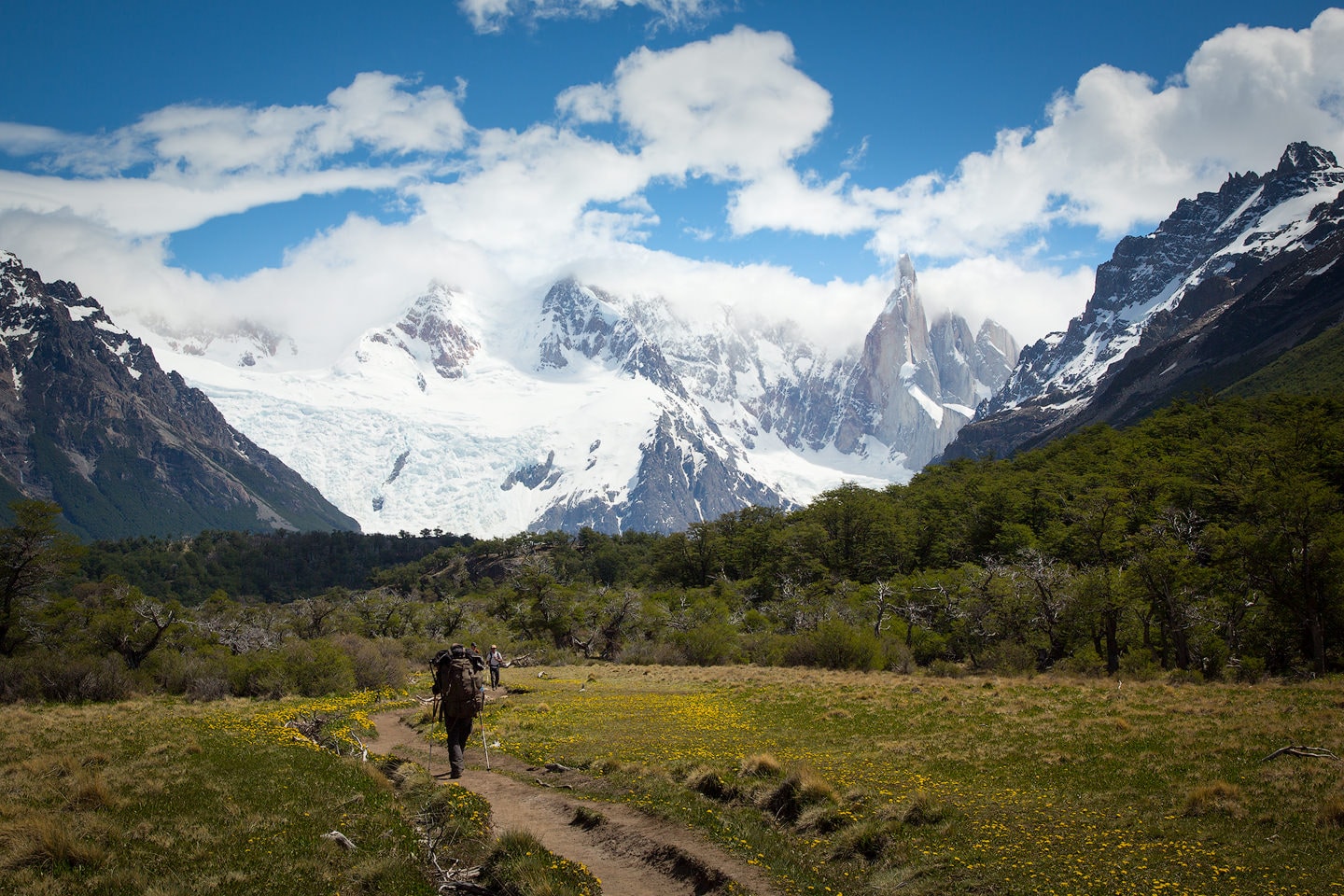
Among the most popular routes around Cerro Torre are the treks to Laguna Torre and Loma del Pliegue Tumbado. One leads to a glacial lake at the foot of the mountain, where icebergs drift silently on milky grey waters. The other climbs high above the valleys, revealing a sweeping view of the entire Fitz Roy and Cerro Torre range. Both trails offer moments of solitude and awe — whether standing at the lake’s edge, staring into the clouds, or reaching a windswept summit where the mountains stretch beyond the horizon.
Landscape Photography
Without a doubt, Cerro Torre is one of the most unique mountain peaks in the world. Its needle-like shape, crowned with the distinct ice mushroom at the summit, is instantly recognizable, making it a stunning subject for landscape photography. It’s no surprise that this iconic peak has captivated the imagination of photographers and adventure seekers alike for decades. Surrounded by glaciers, lakes, and rivers, all contributing to the dramatic and awe-inspiring scenery, Cerro Torre offers a diverse range of landscapes to explore and photograph. Naturally, its beauty has drawn more and more photographers (and landscape photography workshops) over the years, making it harder to find unique compositions or moments of solitude.
Unique Landscapes
The location of Cerro Torre makes it a truly special place for landscape photography. Nestled in the remote and wild Patagonian Andes, the peak is accessible only by foot, which adds an element of adventure to the photographic experience. The journey to reach Cerro Torre takes you through pristine wilderness, past turquoise glacial lakes, ancient forests, and towering peaks. The trek itself is a memorable part of the experience, offering endless opportunities to capture the raw beauty of Patagonia. Whether you’re an adventure seeker or a landscape photography enthusiast, Cerro Torre should undoubtedly be on your bucket list.
Magic Light
The light around Cerro Torre is nothing short of magical. The Patagonian Andes are known for their dramatic, ever-changing light, which can transform an ordinary scene into something spectacular within moments. Due to strong winds, the weather is notoriously unpredictable, shifting rapidly from clear skies to dramatic cloud cover, and from rain to fleeting rainbows. This constantly changing environment offers photographers the chance to capture a wide variety of moods and atmospheres. Sunrise and sunset, in particular, are breathtaking, with the peak often bathed in a warm golden glow, making it a prime time for landscape photography.
However, capturing Cerro Torre in good weather can be a challenge. The peak is often shrouded in clouds, and the conditions can change rapidly. With this in mind, here are some key tips for photographing Cerro Torre:
Best Seasons for Photographing Cerro Torre
Cerro Torre is a year-round photography destination, but each season brings its own unique challenges and rewards. Having spent time in the area across different months, I’ve come to appreciate how the shifting conditions can dramatically shape both the experience and the final image.
Summer (December–February)
Summer offers the mildest temperatures, making it the most comfortable season for trekking and camping. However, it also comes with notoriously strong winds. During these months, the sunrise light on Cerro Torre tends to be very frontal and flat—less ideal for those chasing dramatic alpenglow. One of the most frustrating summer phenomena is what I call the white wall—thick clouds spilling over from the Southern Patagonian Icefield, covering all major peaks while the rest of the park basks in sunshine. At times, it lingers for days, even over a week, leaving nothing but a blank, grey wall where Cerro Torre should be. It’s a vivid reminder that patience is everything in this landscape.
Fall (March–April)
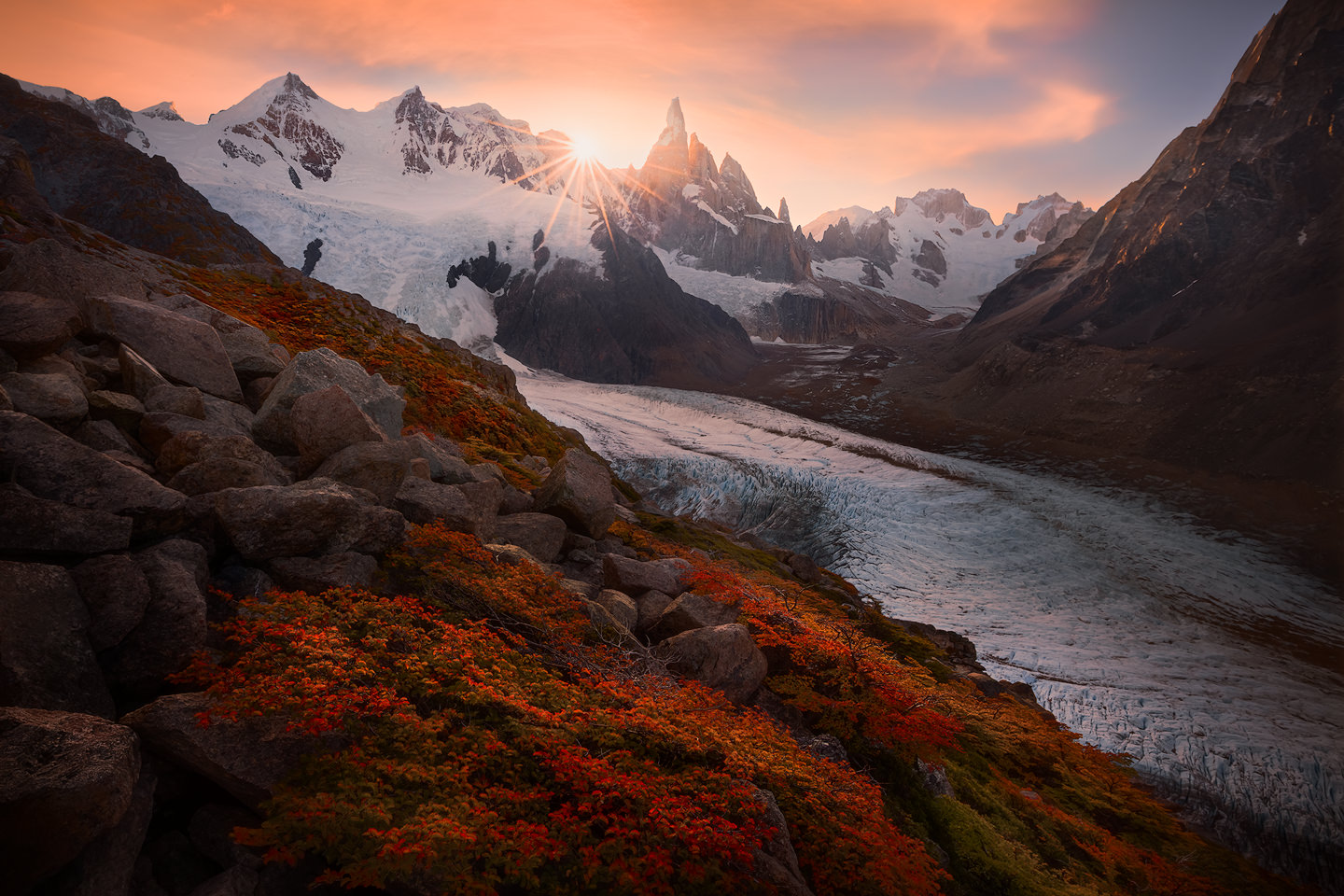
Fall is arguably the best time for photography. As the strong winds of high summer begin to ease, the light becomes more dynamic, casting captivating shadows on Cerro Torre’s rugged face. This period also marks the peak season for photo workshops, so you might not be the only one with a tripod set up at Laguna Torre. Yet, the fall colors around Cerro Torre more than make up for the extra company — fiery orange and red hues in the lenga forests provide stunning foreground elements that add an entirely new dimension to your compositions. In my experience, fall also offers the highest chances for fantastic cloud displays and dramatic atmospheric moods.
May stands out as the most challenging month for capturing Cerro Torre’s magic. With autumn’s foliage long fallen and winter yet to take hold, the landscape finds itself in a barren, transitional state. The vibrant colors have faded, leaving the terrain feeling desolate — often making May one to skip in favor of more visually arresting seasons.
Winter (June–August)
Winter is the most overlooked season but can be incredibly rewarding. Though it’s cold, the solitude is unmatched, and the landscape transforms in ways rarely seen at other times of the year. Laguna Torre often freezes over, creating fascinating ice formations that make for unique and compelling foregrounds. If you’re willing to brave the temperatures, winter offers a chance to capture Cerro Torre in its most tranquil and untouched state.
Spring (September–November)
Spring is a bit of a wildcard but can present unexpected photographic opportunities. The weather remains unpredictable, yet the landscapes begin to awaken. Small wildflowers bloom in the meadows, adding a delicate contrast to the rugged peaks. While the lenga forests may not yet have the fiery hues of fall, their fresh spring greens still yield inspiring compositions — and the thinner crowds make it easier to find those rare moments of solitude.
No matter when you go, patience is key. The weather in this remote corner of the world is notoriously unpredictable, and you may wait days for a glimpse of the peak. But when the conditions finally align, the reward is more than worth the wait.
Best Locations for photographing Cerro Torre
The area surrounding Cerro Torre is a photographer’s playground, offering a variety of vantage points that capture the mountain’s dramatic character from multiple perspectives. Two of the most popular spots are Laguna Torre and Loma del Pliegue Tumbado — each providing its own unique set of creative opportunities.
Laguna Torre
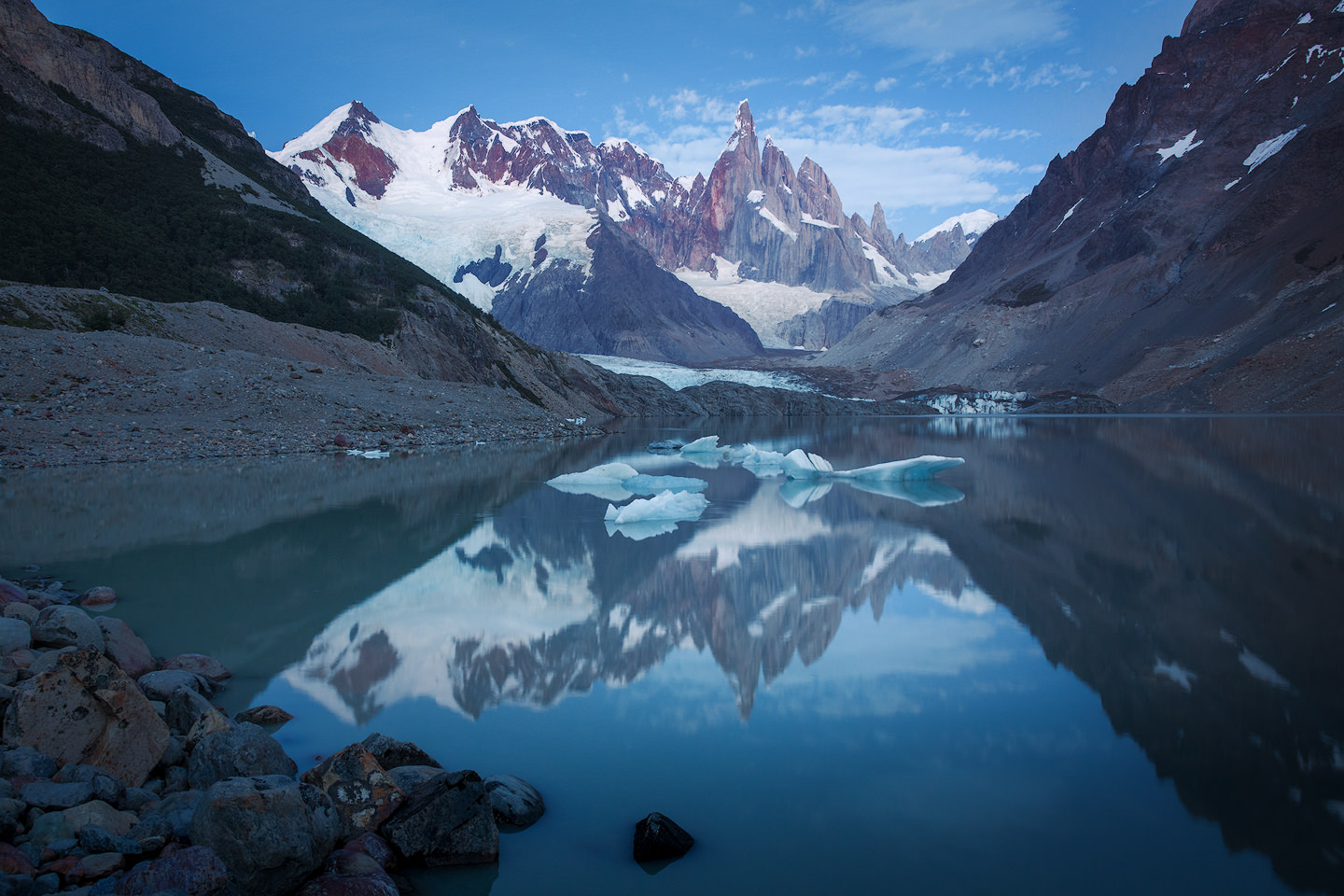
Laguna Torre is a must-visit location for capturing Cerro Torre’s iconic reflection on still water. In the early hours, the lake often transforms into a perfect mirror, doubling the visual impact of the mountain. Experiment with long exposures to capture the dynamic motion of waves crashing on the shore, adding an ethereal quality to your compositions. Nearby, the Rio Fitz Roy offers additional possibilities — its flowing waters can serve as an intriguing foreground element, allowing you to play with reflections of light and movement. With the camp conveniently nearby, night photography becomes a viable option, opening up the chance to shoot Cerro Torre under starry skies or capture the subtle glow of the moon over this dramatic landscape.
- Distance: 19km (round trip)
- Duration: 5-7 hours (round trip)
- Max. elevation: 669m
- Level: intermediate
- Permit: not required
Loma del Pliegue Tumbado
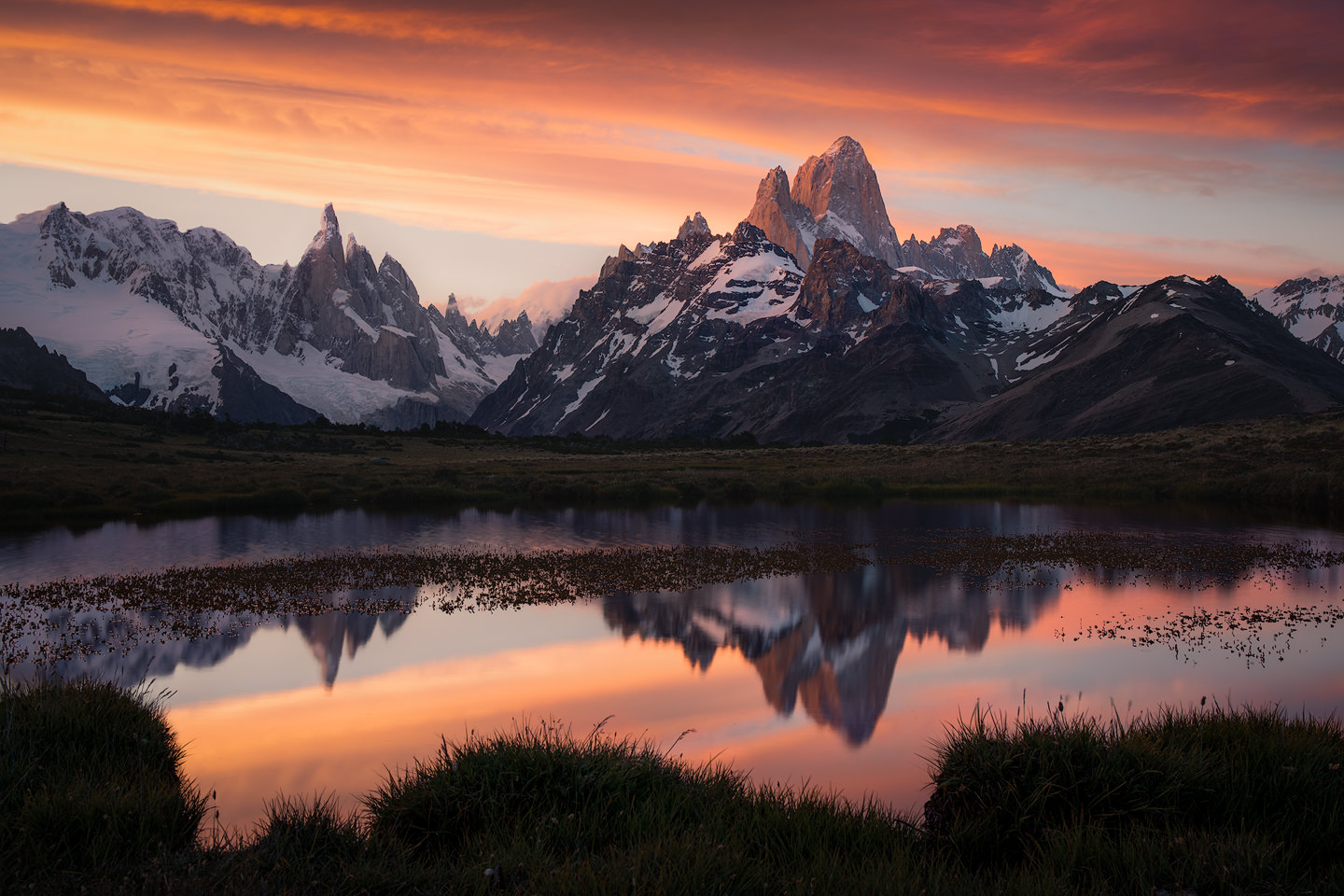
For a completely different perspective, head to Loma del Pliegue Tumbado. This elevated vantage point provides a sweeping panorama that places Cerro Torre within the broader context of the Patagonian Cordillera. Wide-angle lenses work particularly well here, allowing you to emphasize the scale of Cerro Torre, while the interplay of light and shadow across the valley adds depth and drama to your images. Keep your eyes open on the way to the top. I’ve found small ponds that, in the right conditions, turn into natural infinity pools — perfect for capturing reflections of Cerro Torre and Fitz Roy.
- Distance: 19km (round trip)
- Duration: 5-7 hours (round trip)
- Max. elevation: 669m
- Level: intermediate
- Permit: not required
Equipment
Embarking on a landscape photography trip can be an exciting and rewarding experience, but it’s important to have the right equipment to ensure you capture the stunning vistas in all their glory. From the right camera and lenses to filters, tripods, and accessories, there are a lot of considerations to keep in mind when packing for your journey. Below you find some of my thoughts and recommendations on the essential equipment you’ll need for a successful landscape photography trip.
Lenses & Filters
You’ll find yourself surrounded by sweeping vistas, towering peaks, and vast glaciers, making it the perfect place to showcase the power and majesty of the natural world. Wide angle lenses work wonders on compositions, but don’t underestimate the power of a close-up shot with a tele lens. Bring a Polarizer and a range of ND filters to shoot long exposures of streams and lakes.
Lenses (full frame equivalent)
- 14-24mm f2.8
- 24-70mm f4
- 70-200mm f2.8
- 2x Teleconverter
Filters
- Circular Polarizer
- ND6, ND9
- (optional) range of graduated NDs
- (optional) Big Stopper or similar
- suitable adapters for all lenses
Tripod
As always in Patagonia, make sure to bring a light, but sturdy and reliable tripod. The region is known for its unpredictable weather, which can lead to strong winds and low light conditions. A tripod will help you stabilize your camera and ensure that your images are sharp and in focus, even in difficult shooting conditions. Familiarize yourself with the tripod ahead of your trip, conditions change quickly and you might be in a hurry when trying to get your tripod into low angle mode.
Backpack & Accessoiries
A good quality camera backpack is essential for protecting your equipment in the harsh and rugged environment of Patagonia. I recommend a comfortable backpack with weather-resistant materials, offering enough space to stow not only your camera and lenses, but also the essential clothing for hiking or trekking through remote wilderness areas. Make sure not to bury your equipment deep down in the backpack, as photo opportunities may arise at any time – it would be a shame to miss that shot of Cerro Torre and a rainbow just because you had to dig out your camera. As always, bring spare batteries and enough memory cards.
Image Gallery
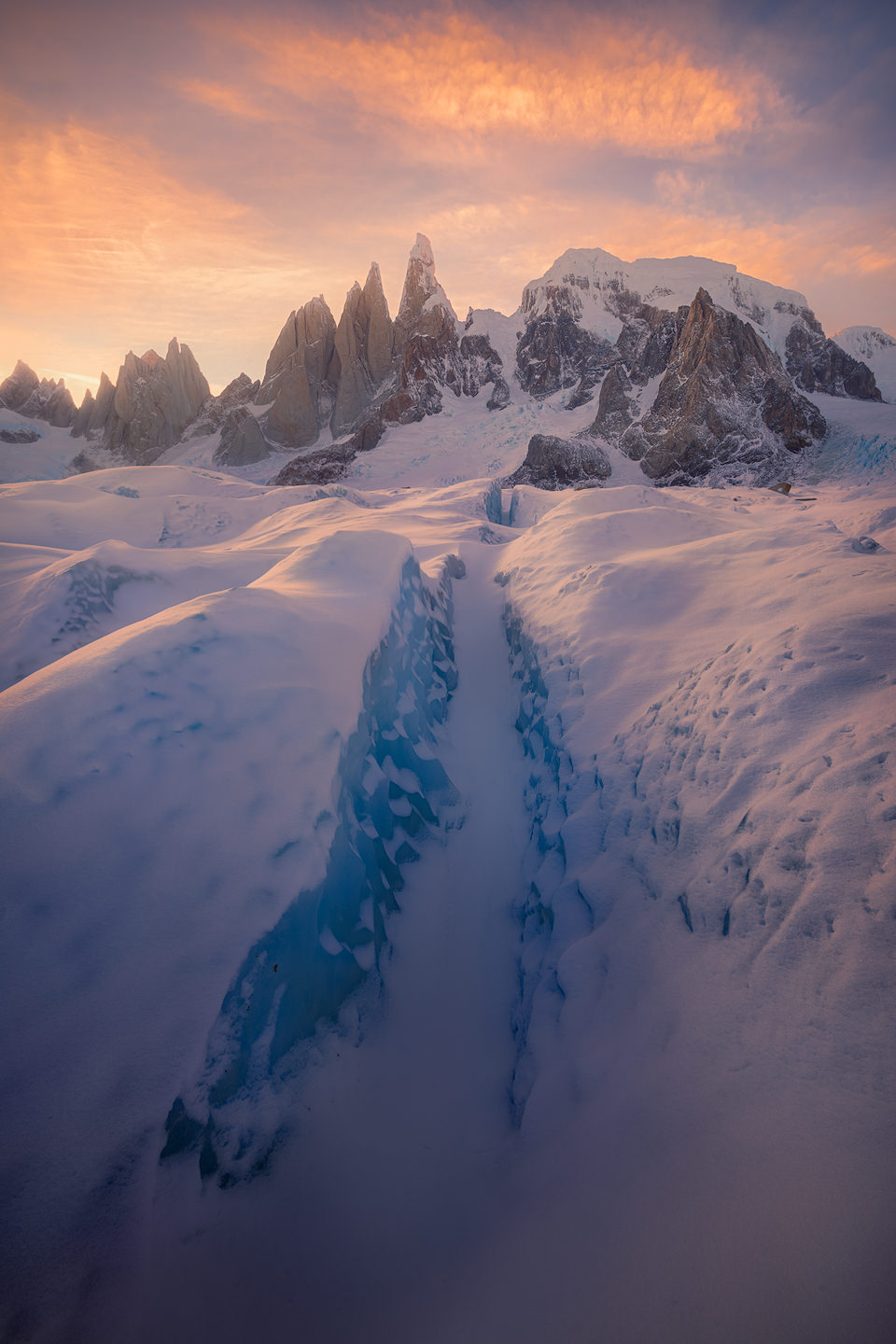
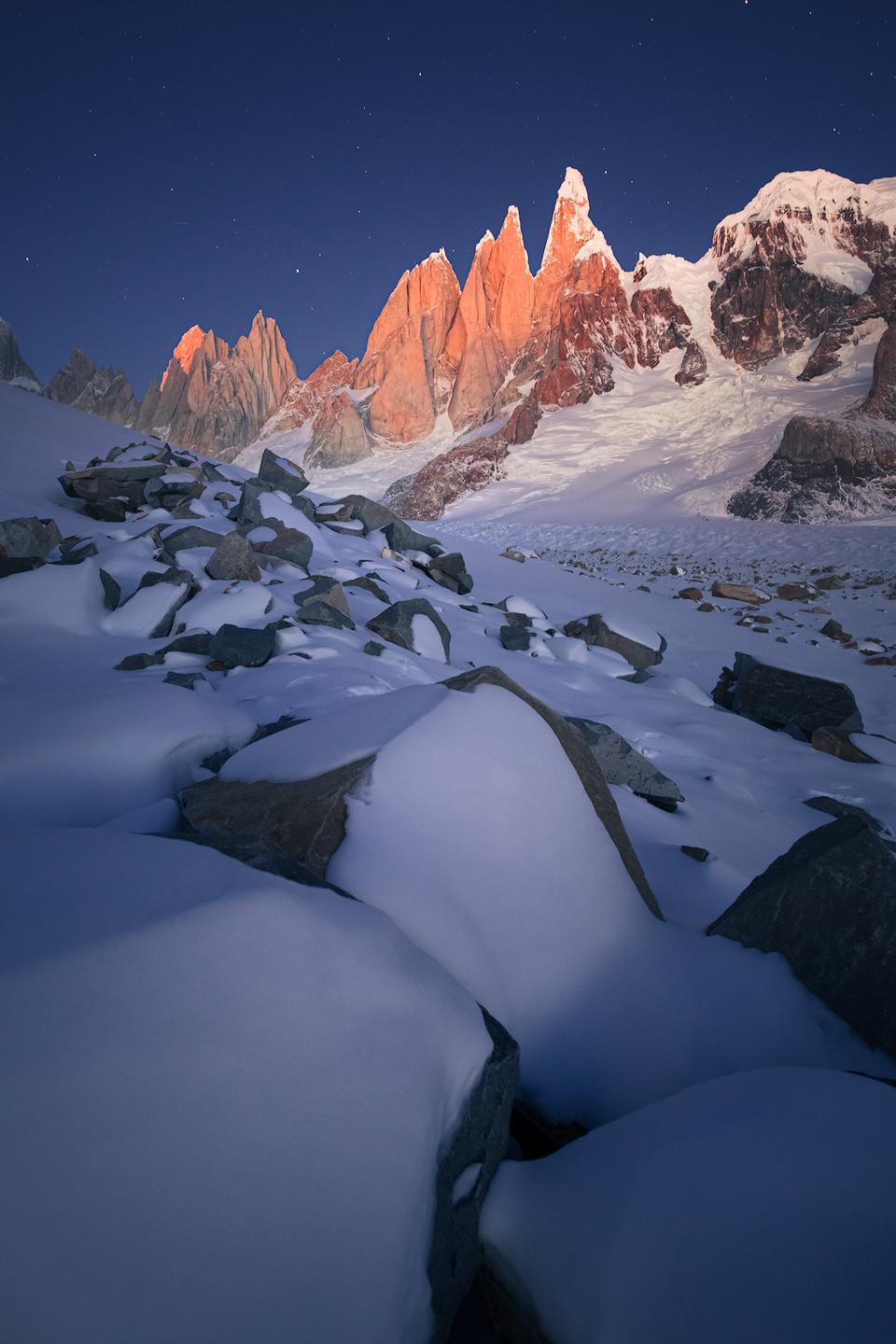
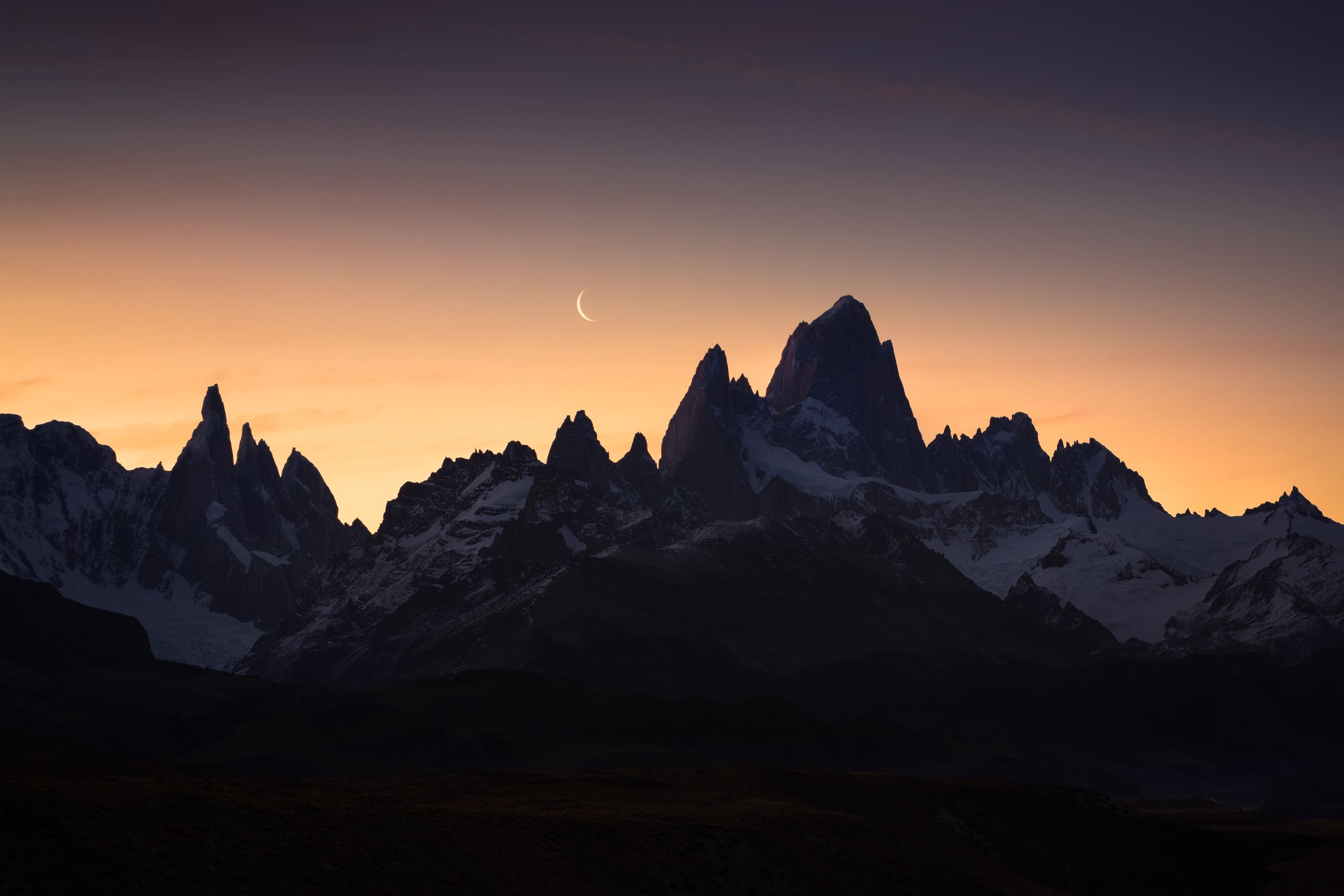
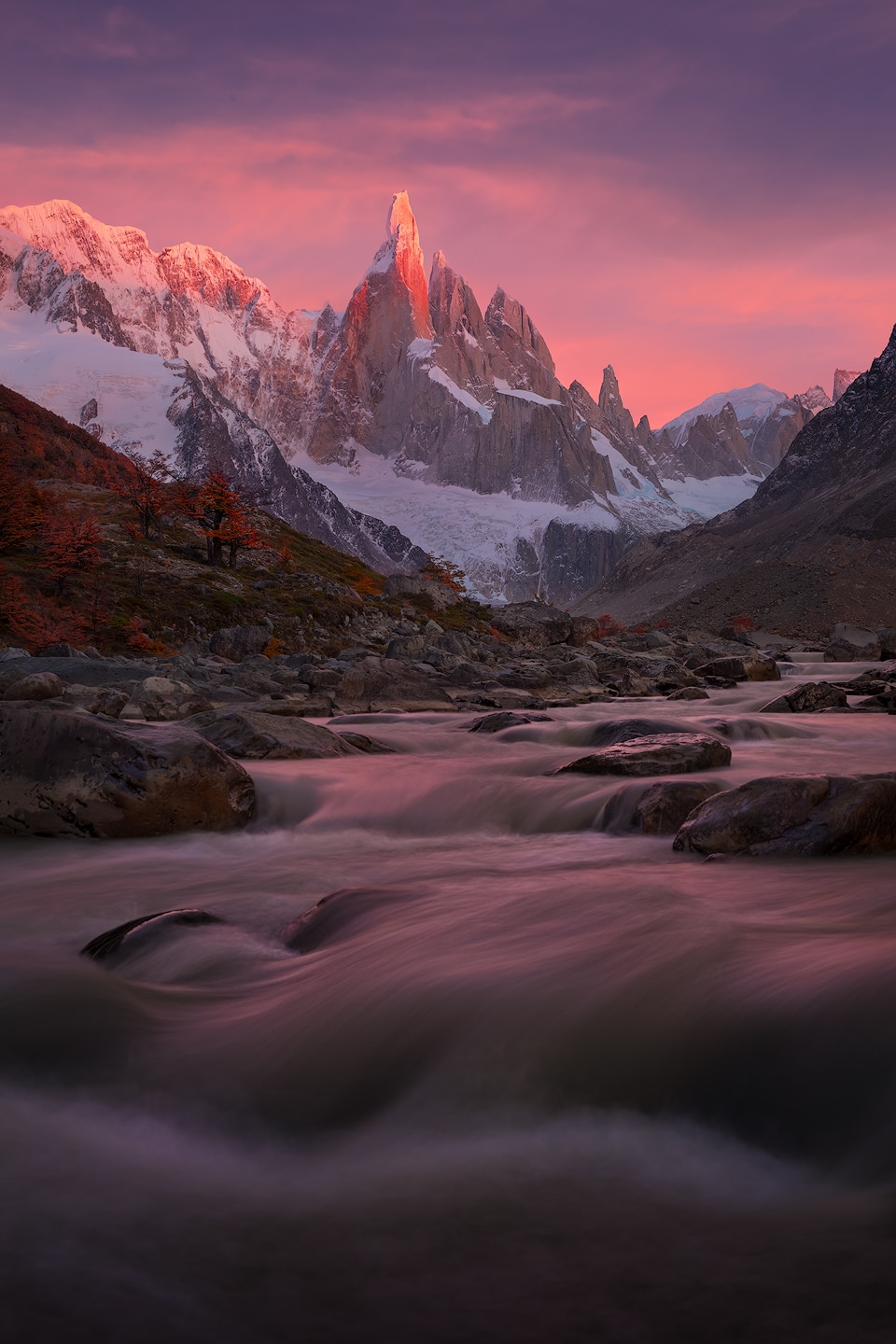
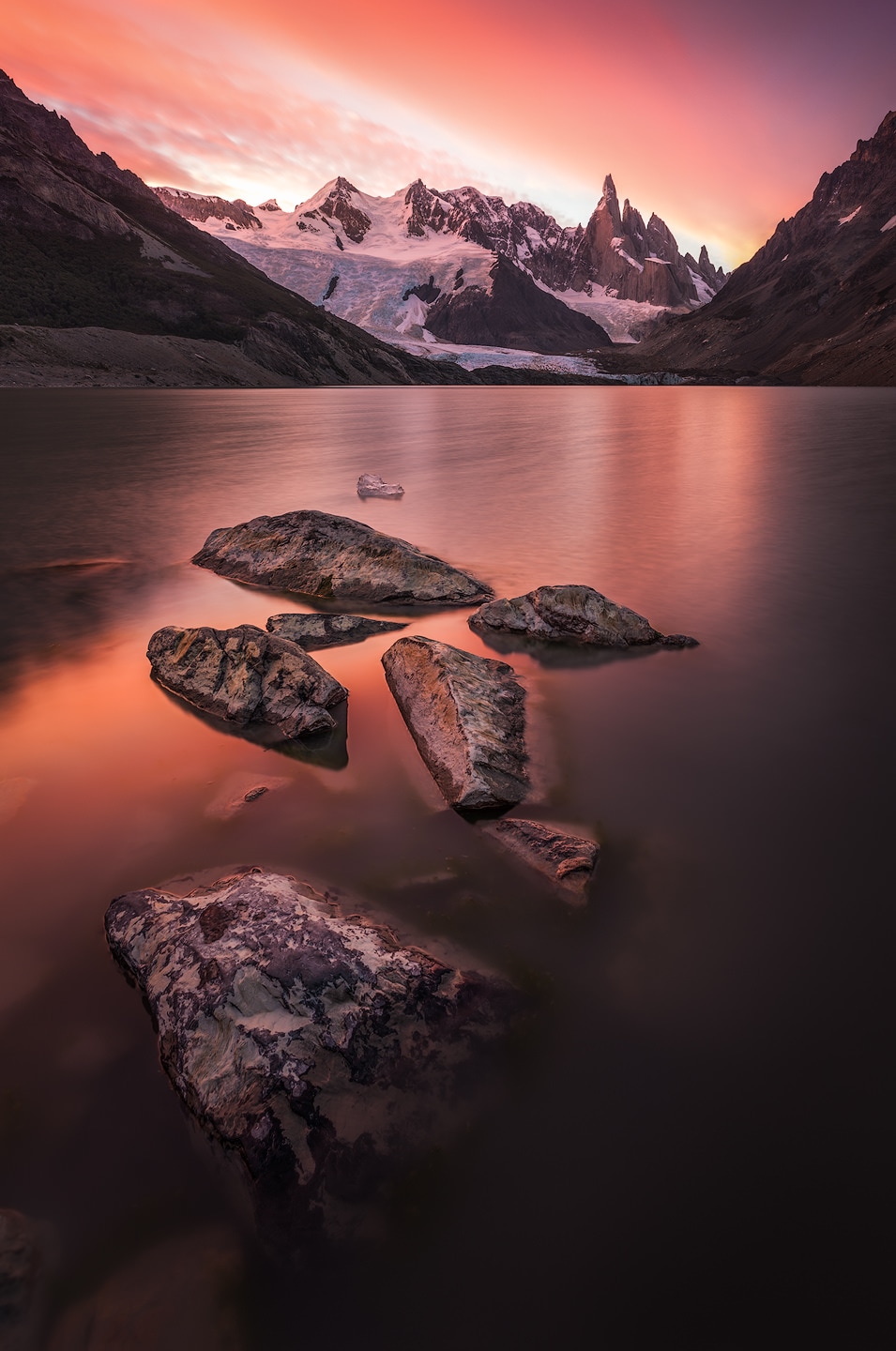
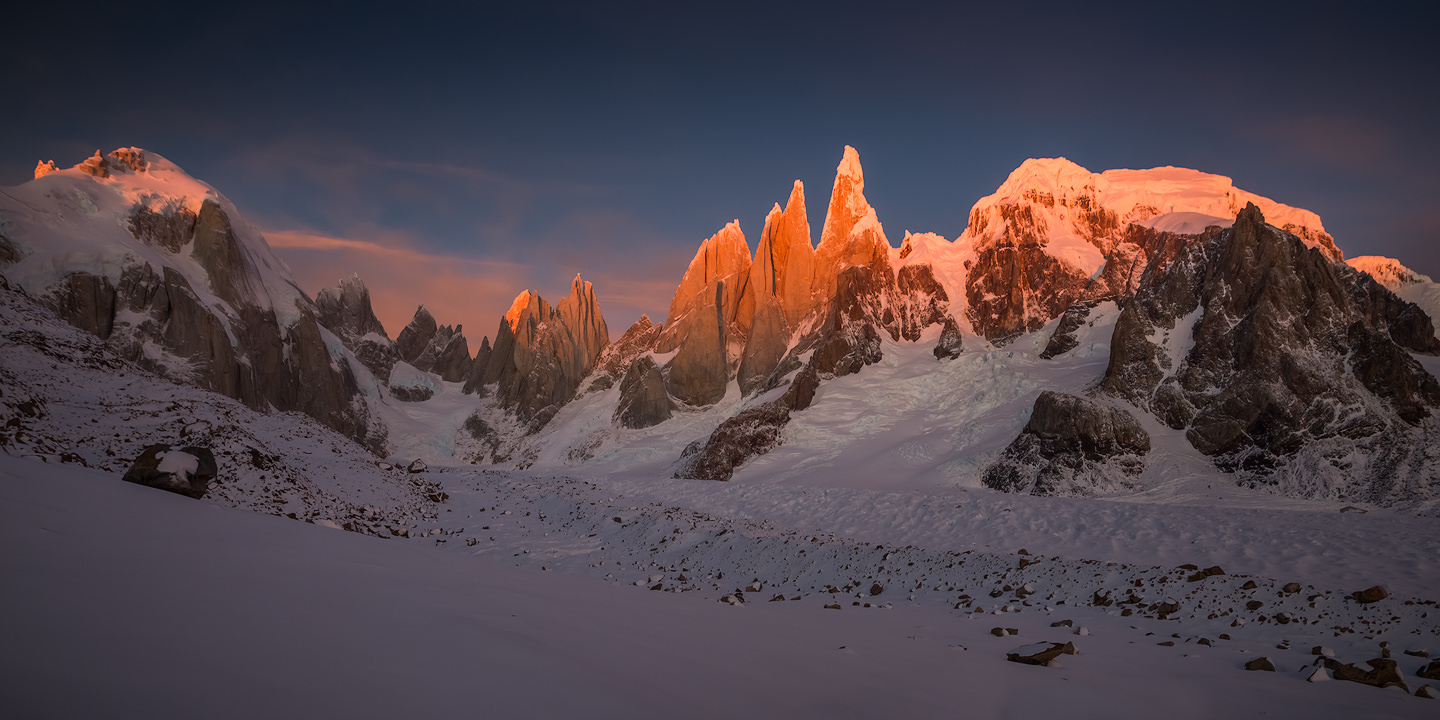
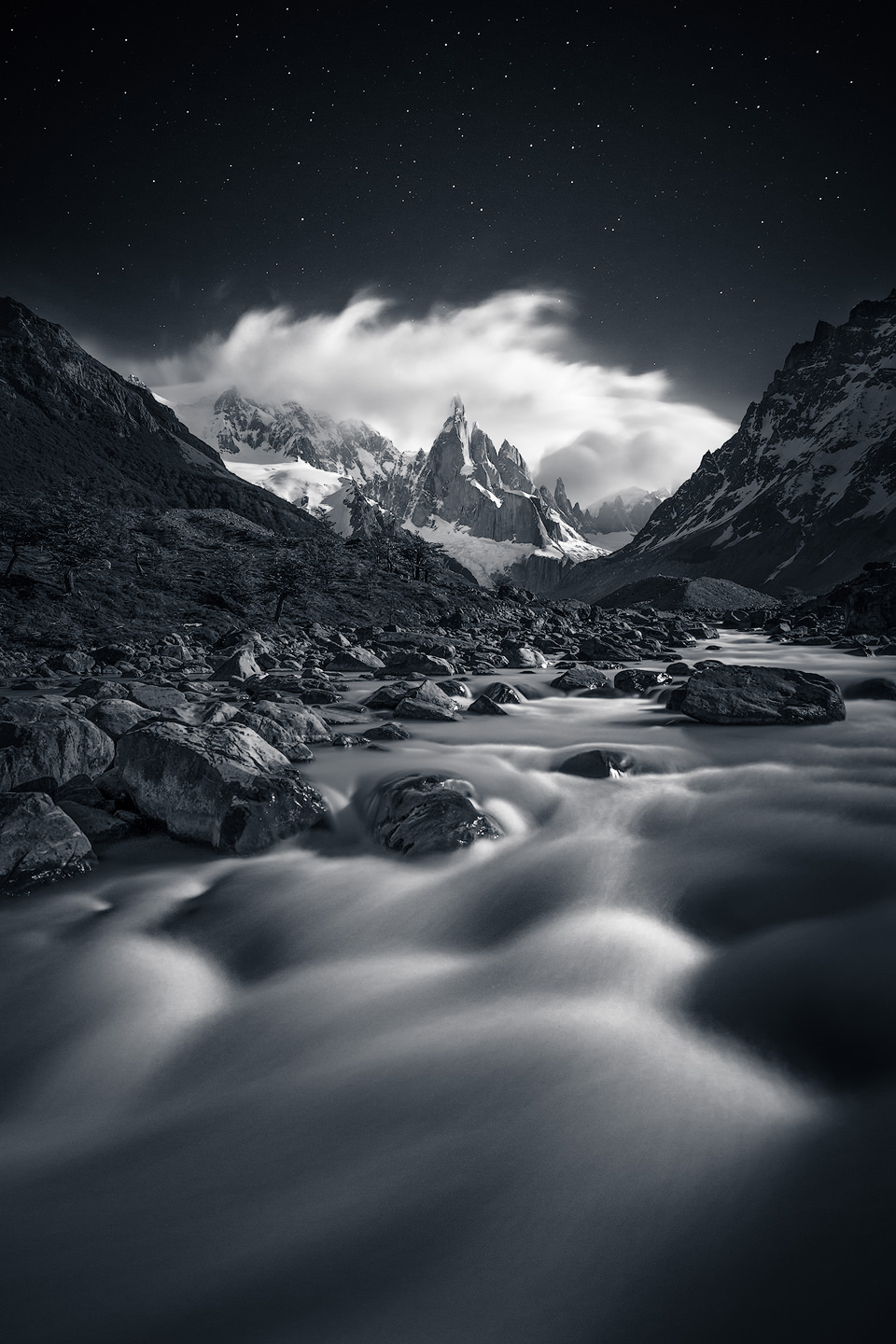
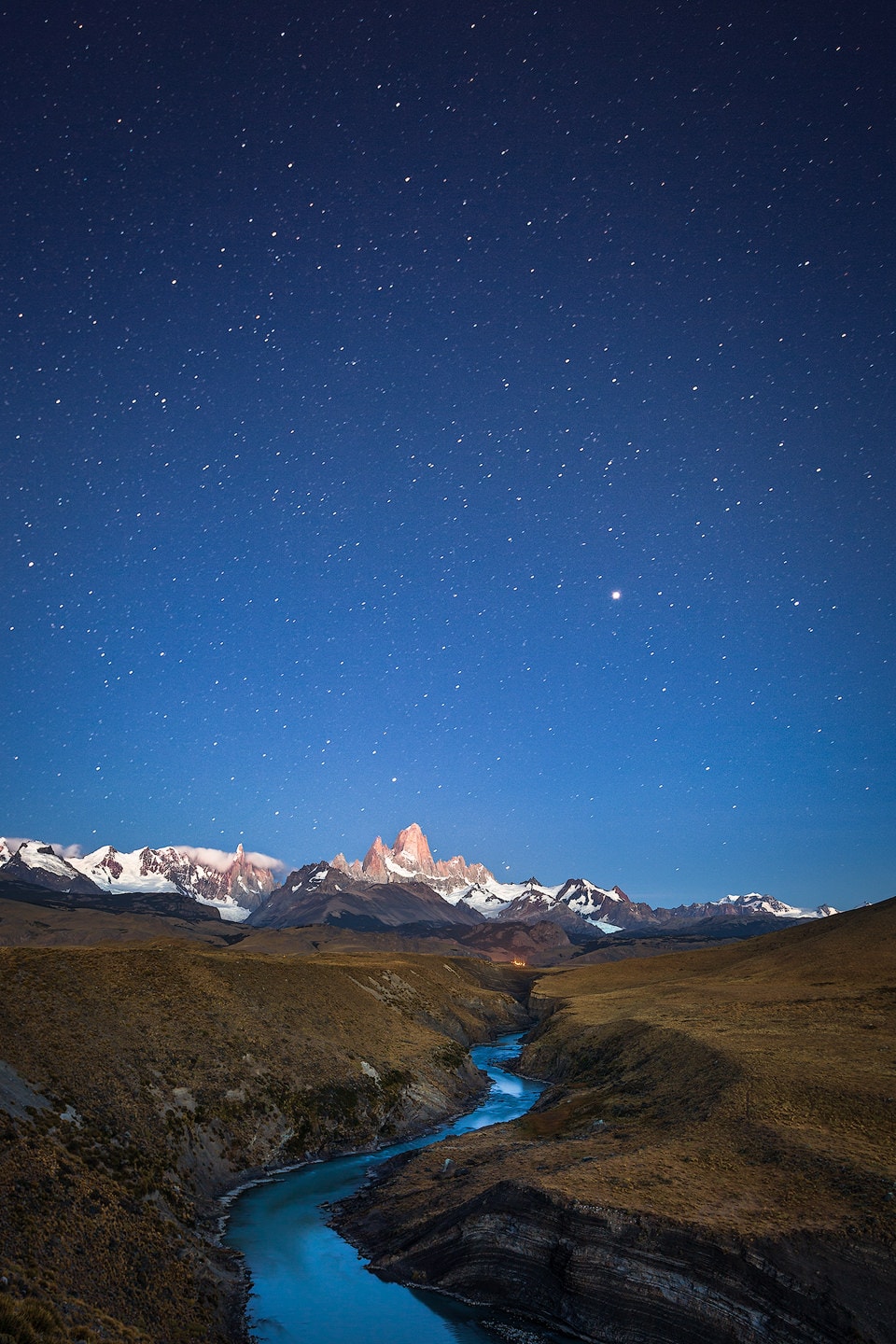
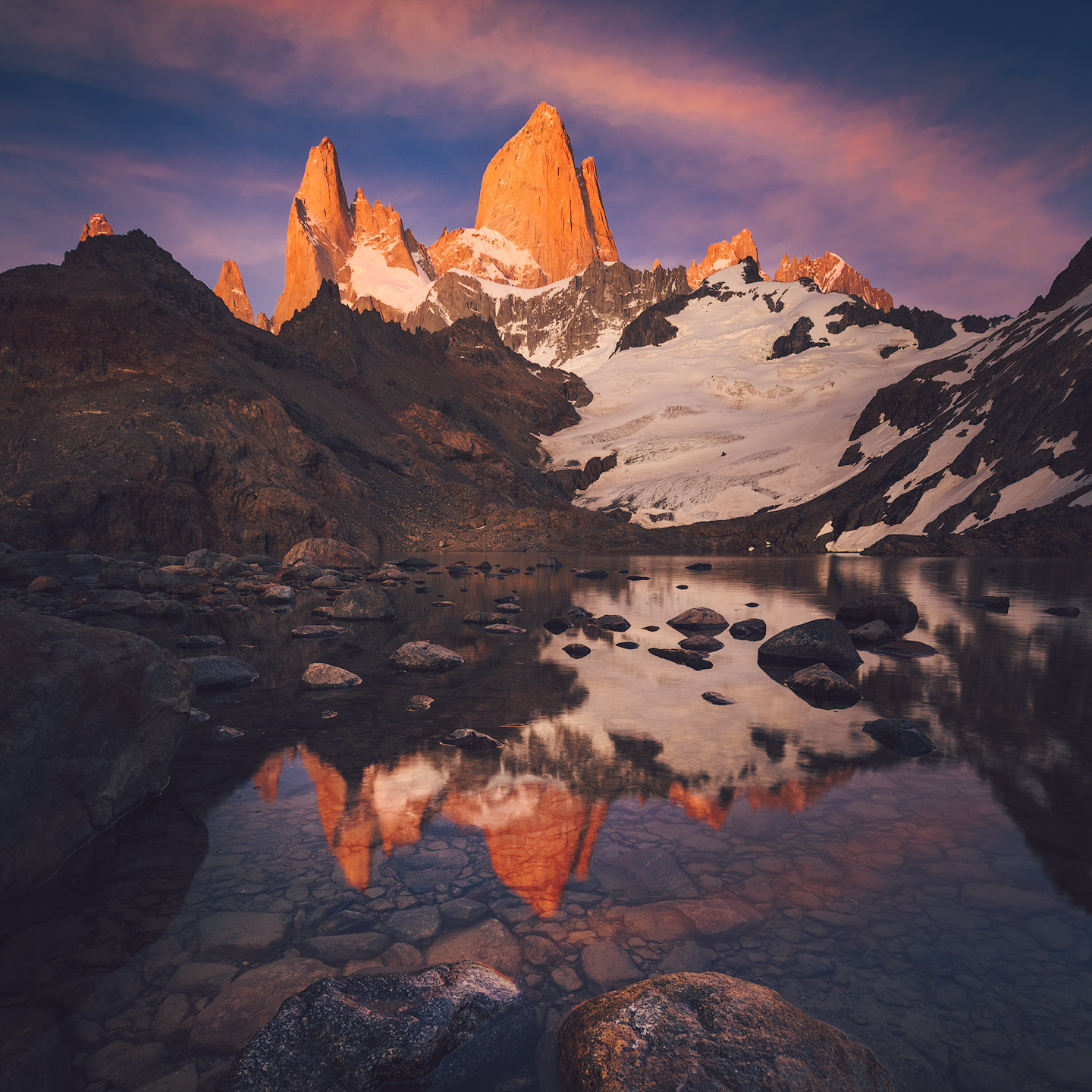
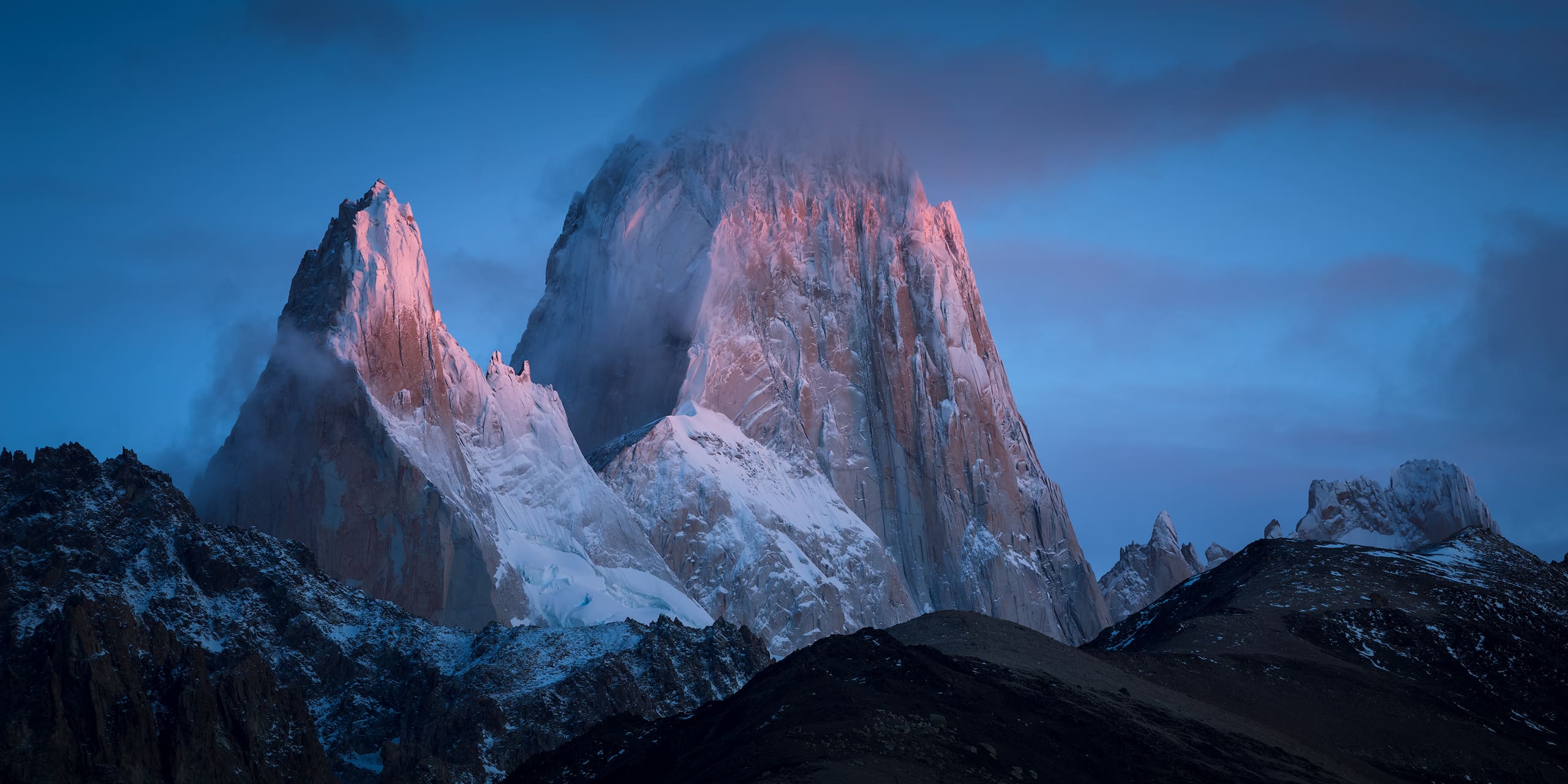
Every image in this gallery is part of my journey with Cerro Torre — over a decade of visits and countless days waiting for the perfect moment. Each photo reveals a different facet of the mountain: its imposing presence from varied angles, its transformation across seasons, and the ever-changing dance of light and shadow. These pictures aren’t just documentation; they’re a reflection of the subtle, powerful ways Cerro Torre has revealed itself over time. I hope you enjoy them as much as I enjoyed capturing them.
Explore Cerro Torre!
For years, Cerro Torre has been more than just a mountain to me — it has been my photographic playground and a quiet sanctuary for reflection. Many days and nights spent waiting for the elements to align, book in hand as I observed the interplay of light and landscape, have not only filled my memory cards but also deepened my understanding of life and myself. The images and stories that follow are a reflection of those experiences — of Cerro Torre’s beauty and the personal journey it led me on.
Since I'm being treated to some decent internet connection these days I thought I'd give you a little update about my whereabouts... I'm reciding in Ushuaia at…

Nothing found.
Nothing found.
Nothing found.