
Photographing
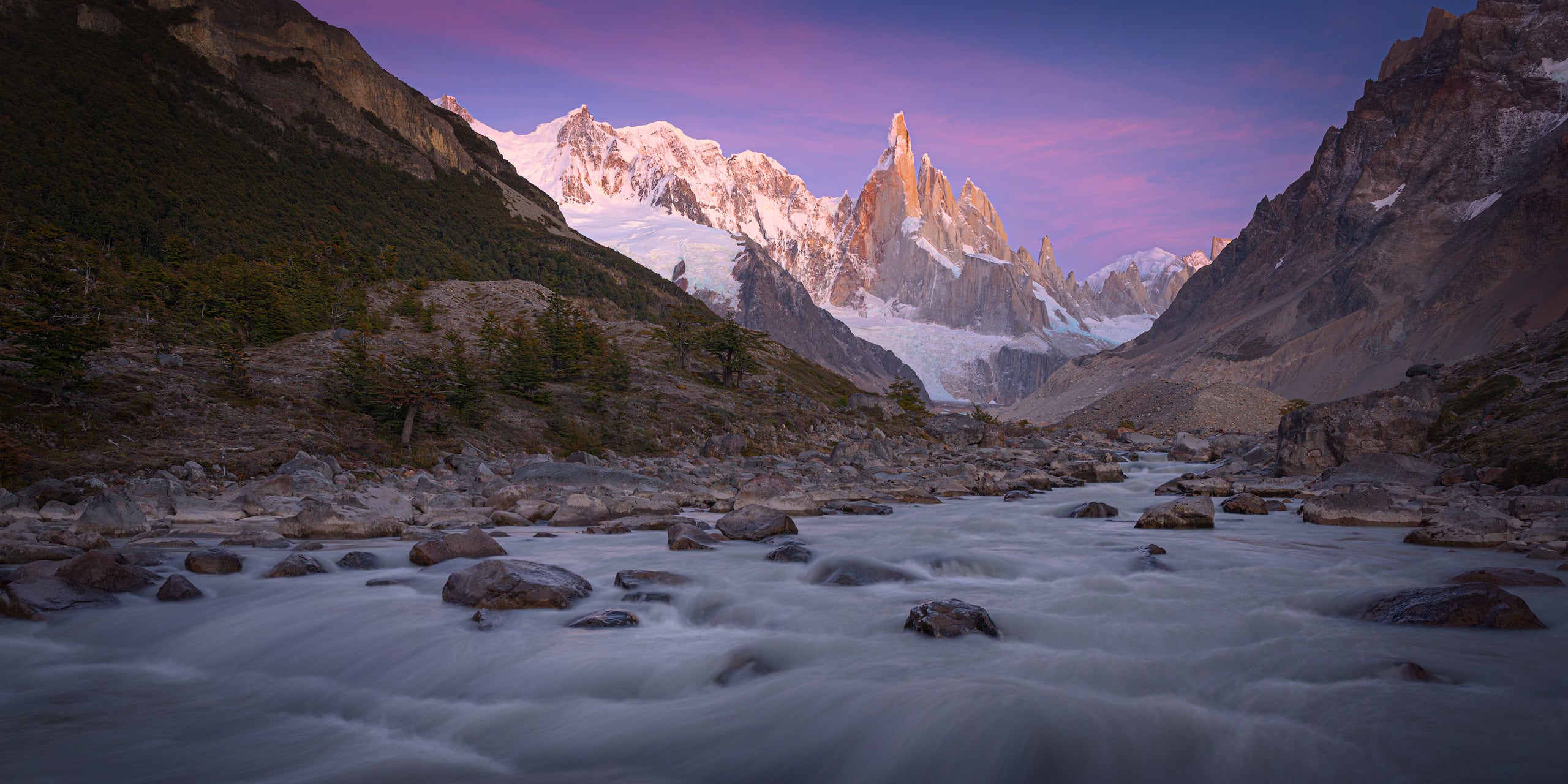
Unlike most photography locations in Los Glaciares, the Río Fitz Roy is not a single viewpoint. It is a stretch of bank with multiple positions across 200–300 metres, each offering a different relationship between the water, the boulders, the forest, and Cerro Torre. The sections below cover how to read the bank, what the foreground offers across the seasons, and when the light on the spire works from here.
What to photograph at Río Fitz Roy
The subject is Cerro Torre at the head of the valley — the same mountain as from Laguna Torre, seen from essentially the same angle but grounded in moving water rather than the static lake. Unless something specific draws you to photograph Laguna Torre — ice along the shore, an exceptional sky — the river offers at least one advantage over the lake: motion. From the bank, the river provides a natural axis upstream toward the peak: the valley narrows, the water quiets between dark boulders, and the granite spire fills the head of the frame.
The stretch of bank worth working runs from the lake outlet downstream toward camp. Positions close to the water place the river strongly in the foreground; positions further back bring more of the valley floor and forest into the frame. Neither is always better — move the bank, see what the light is doing on the peak, and choose accordingly. A wide composition and a tight telephoto frame of the peak above the forest are both viable from the same morning.
Foreground options
The river itself is the primary foreground — milky with glacial flour, moving between dark boulders and stones. An ND filter slows the water into a luminous, silky surface that contrasts against the angular rocks; without it, the current and texture stay visible. Both approaches work. The choice depends on the light and how much movement the frame needs.
Medium and large boulders sit in and along the river. Set up directly on one and the near-foreground is immediate and tactile. Step back and the boulders become mid-ground elements anchoring the water below the mountain.
In autumn — late March through mid-April — ñirre and lenga trees along the banks turn deep red and orange. This is the defining seasonal foreground of this location: warm colour directly below a peak that may already have fresh snow on the summit. The colours appear first at higher elevations and move downward through the valley over days rather than weeks. Watch the upper forest early; the lower bank follows.
Best time to photograph Río Fitz Roy
Sunrise is the primary window. The east-facing spire and glacier catch the first light directly — the light can arrive gradually on a calm morning, or with full Patagonian drama: colour in the sky, cloud breaking above the peaks, patches of light sweeping across the granite. This is not a location built for one type of morning.
Between December and February, the light hits Cerro Torre straight on at sunrise, leaving little shadow to define the ridges. From March into April the angle becomes oblique — and on the Río Fitz Roy this seasonal shift matters twice over. The light sculpts the spire, and the ñirre and lenga are turning. These are the weeks the location exists for.
The peak colours in Los Glaciares appear sometime between late March and mid-April, depending on altitude and the year. Fresh snow on the summit often arrives at the same time. When the two align — red forest, white granite, oblique morning light — the window is brief and unmistakable.
- Nearest base
- Campamento De Agostini
- Walking distance
- 400m
- Coordinates
- 49.3327° S, 72.9918° W
Nearby Photography Locations
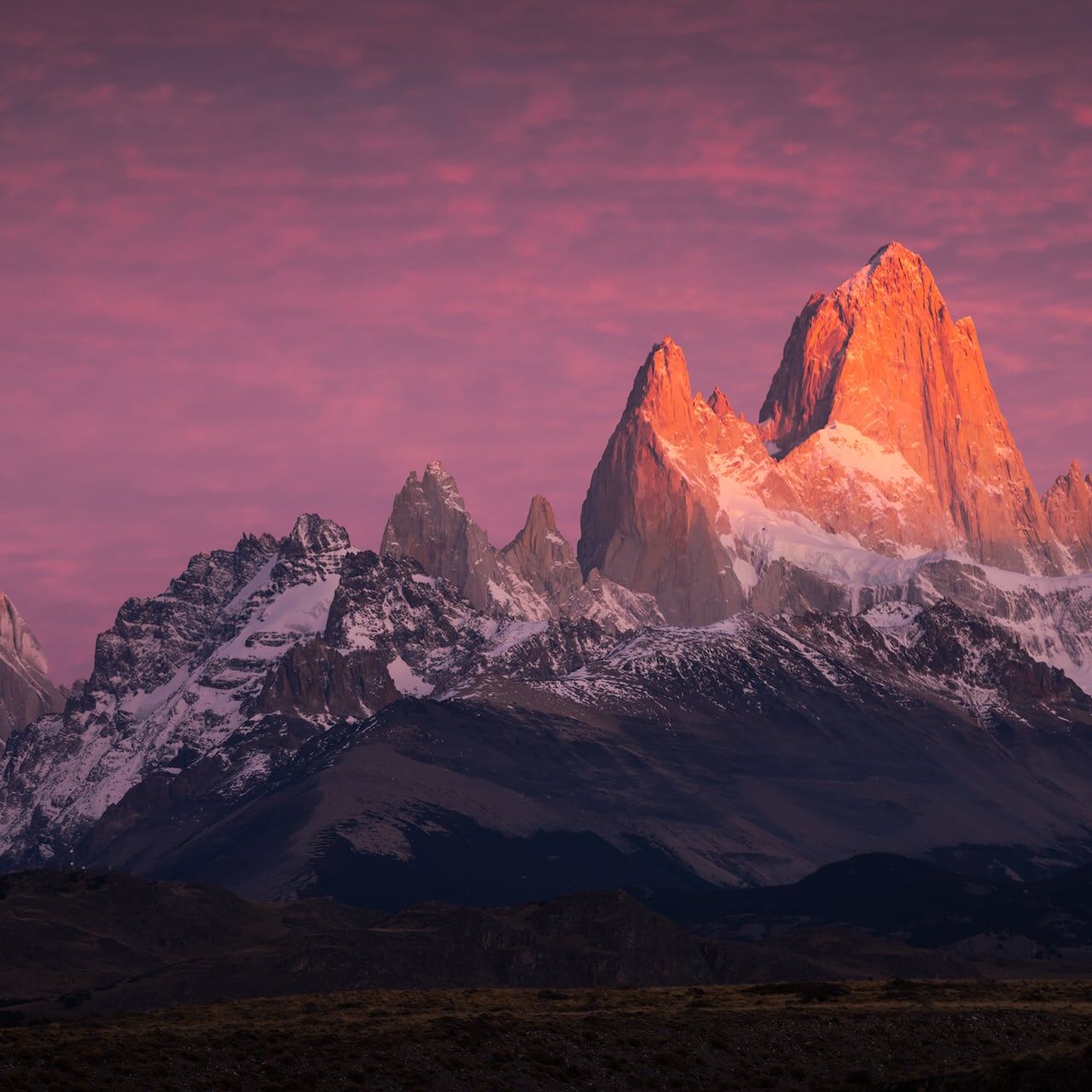
Parque Nacional Los Glaciares stretches across the southern edge of the Patagonian Andes — from the granite towers of El Chaltén in the north to the advancing ice of Perito Moreno in the south. For landscape photographers, the park offers one of the most concentrated collections of mountain and glacial viewpoints in the world. These are the most popular locations for photography.
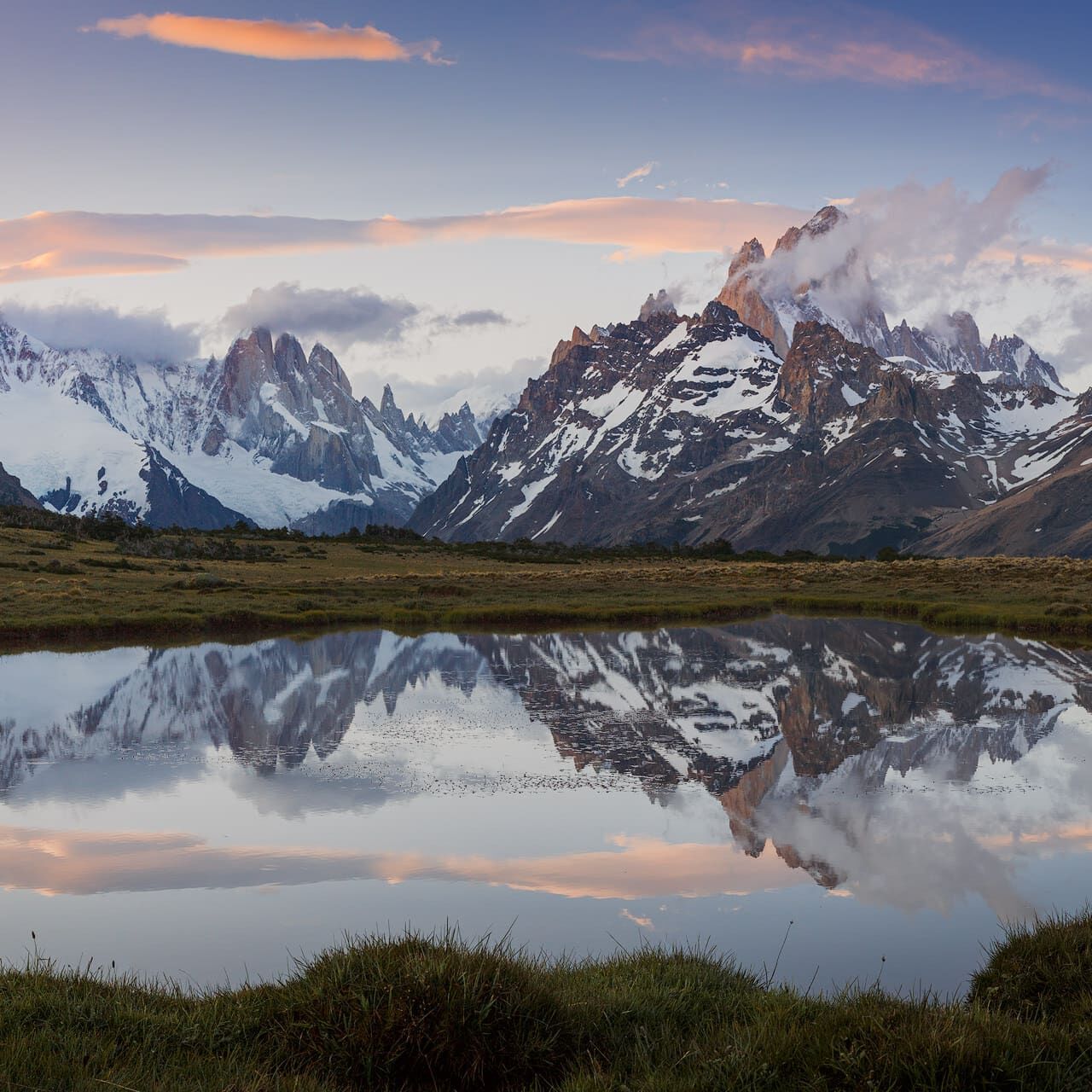
Most viewpoints around El Chaltén frame one mountain or the other — Fitz Roy's east face from below, Cerro Torre standing behind Laguna Torre. From the ponds below Loma del Pliegue Tumbado, both towers stand together in a single frame: the southeast face of Fitz Roy and the east face of Cerro Torre, reflected in still water when conditions allow. This is an off-trail, permit-required location in genuinely wild terrain — and it delivers a composition no other viewpoint in the park can match.
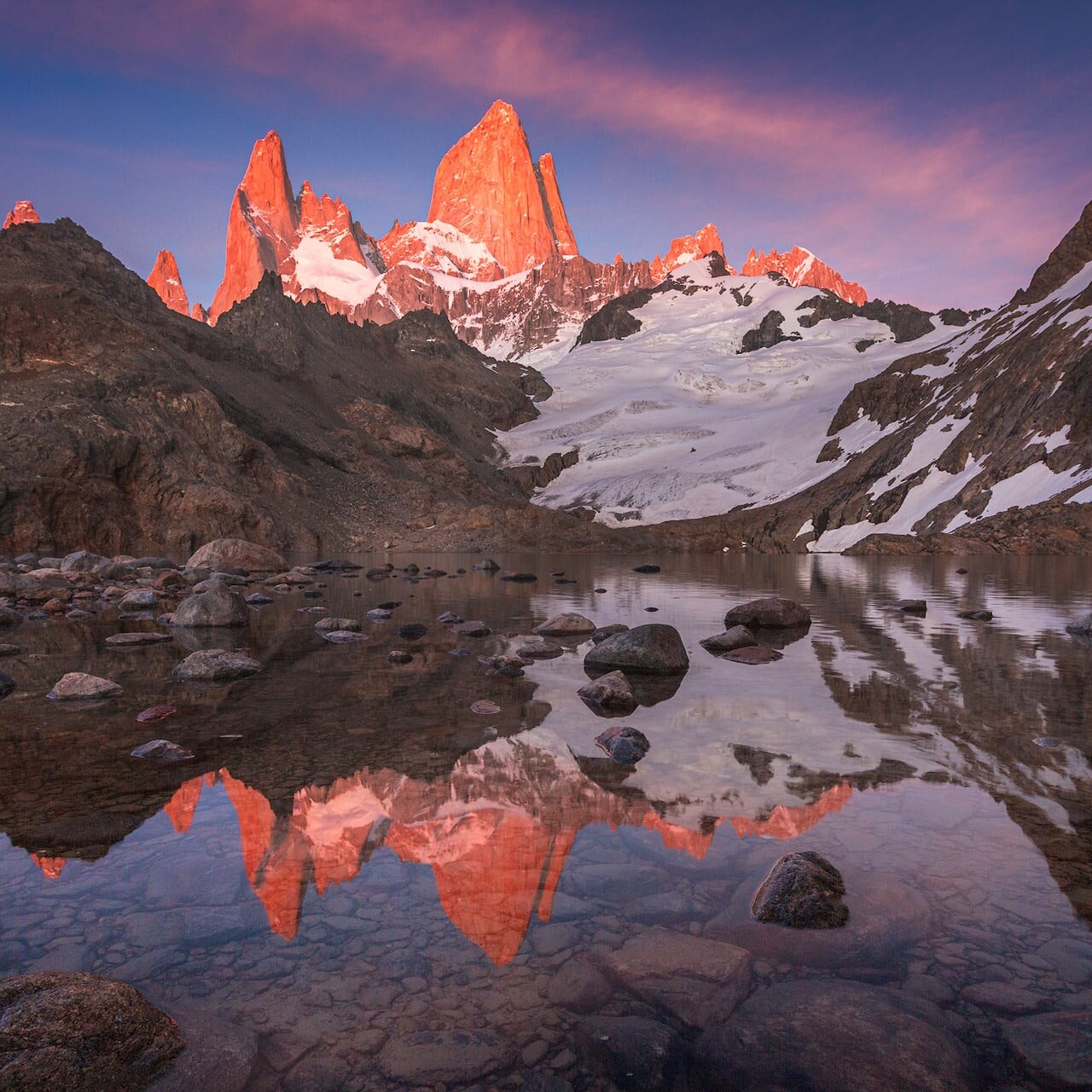
Standing at 1,170 metres in the mountains above El Chaltén, Laguna de los Tres sits directly beneath the east face of Fitz Roy — a position that makes it one of the most photographically powerful viewpoints in the southern hemisphere. The lake is small, and in calm conditions can hold a near-perfect sunrise reflection of the granite towers above. This is where serious landscape photographers come to Patagonia to be.
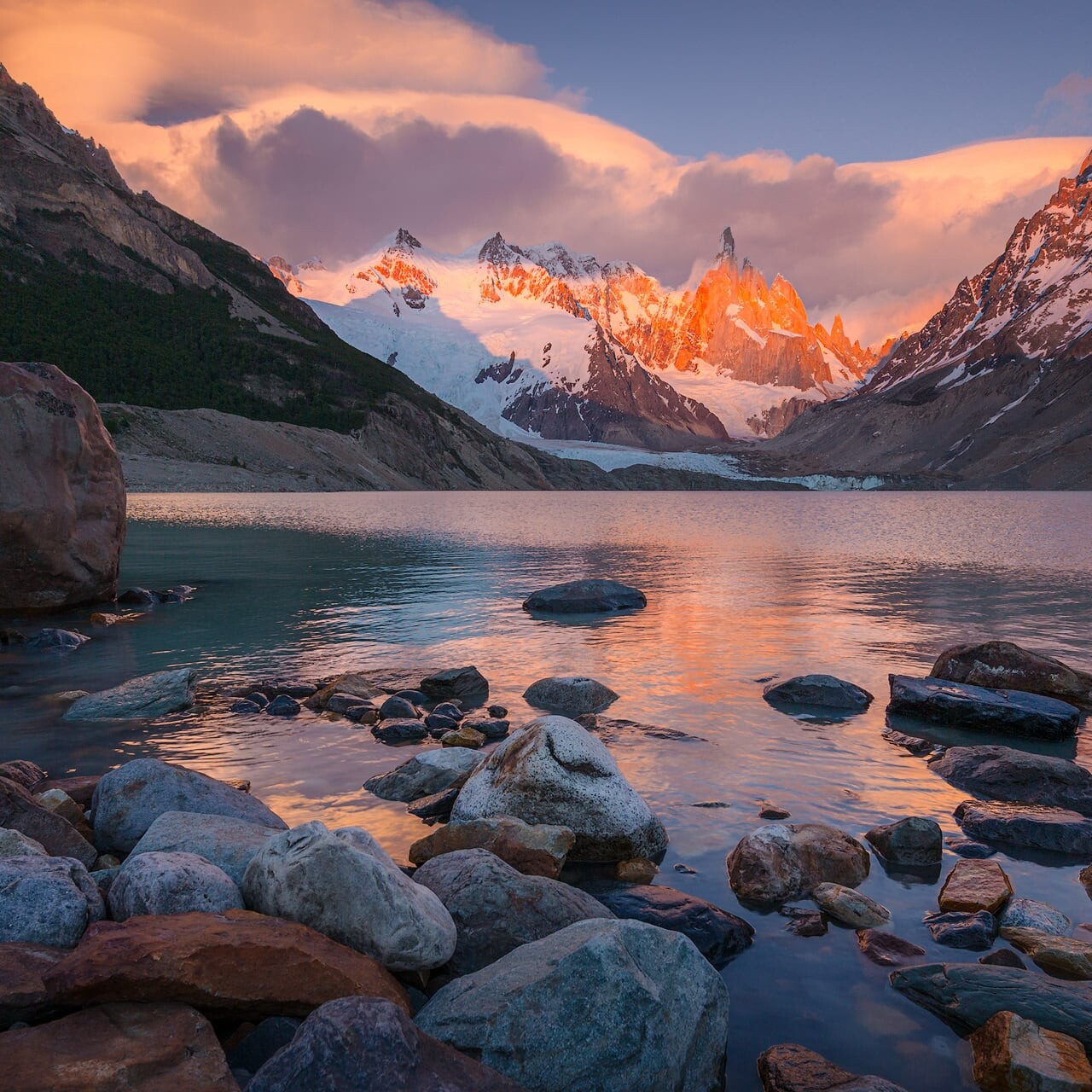
Laguna Torre is the closest you can get to Cerro Torre without a climbing permit or mountaineering equipment — a glacial lake at the foot of one of the most dramatic granite spires on Earth. The mountain rises directly above the glacier at the far end of the lake, placing the photographer in a perfect position to shoot sunrise. For anyone drawn to Cerro Torre, this is as close as you get.
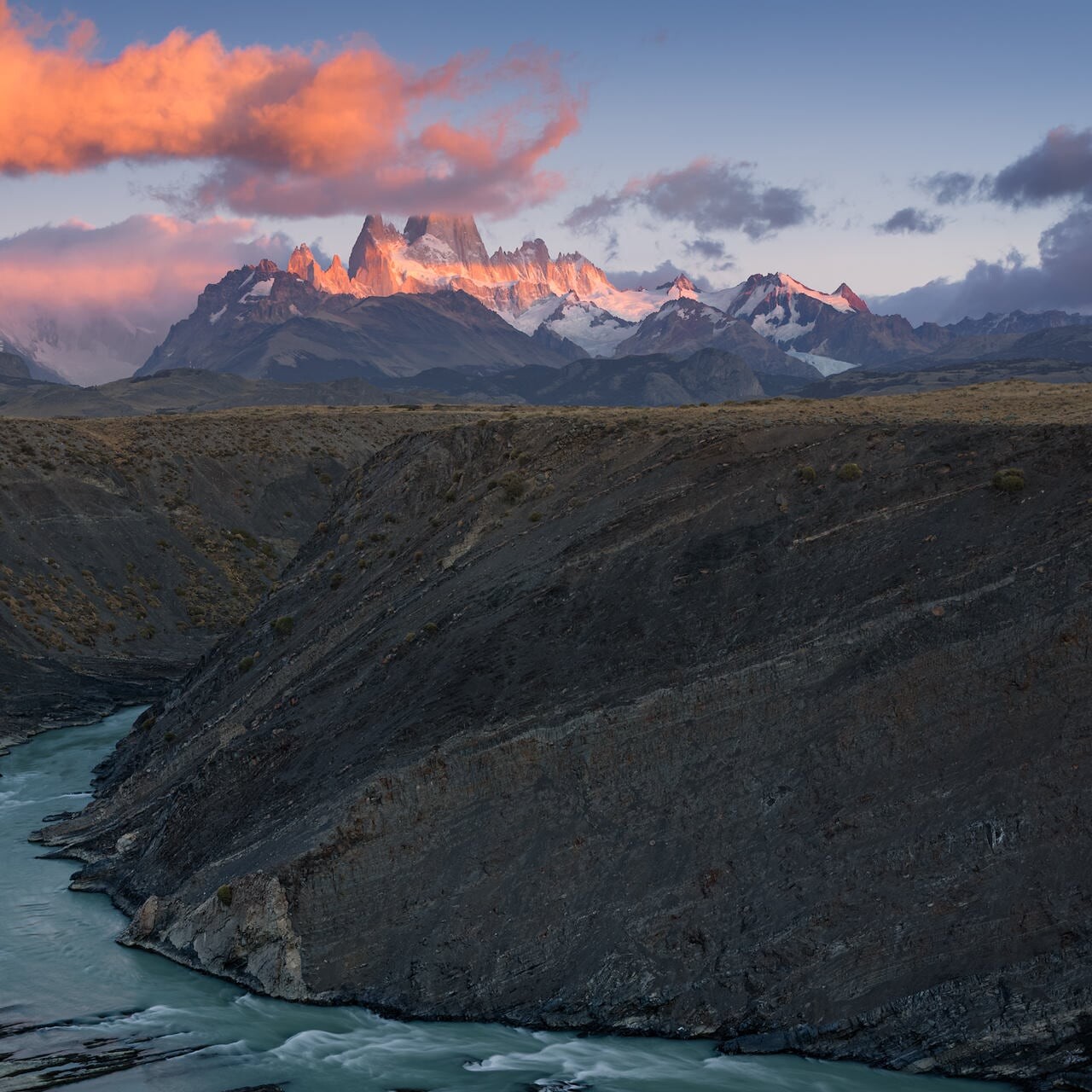
Most viewpoints around El Chaltén offer closeness — the granite filling the frame, the glacier detail sharp, the scale overwhelming. The Cañadón del Río de las Vueltas offers the opposite: a step back, the full Fitz Roy Range in a single frame, and the wide Patagonian sky above. Cerro Torre on the left, Fitz Roy at the centre, every peak and spire between them. From the canyon rim, El Chaltén sits far below — this is the widest accessible view of the massif.