
The Fitz Roy Range at Night
It was my second visit to El Chaltén. An eight-week trip through Patagonia, and by the time we reached Parque Nacional Los Glaciares the weather had settled into a pattern I hadn’t planned for: clear skies, no wind, not a cloud between the mountains and the horizon. The kind of conditions that make everyone else happy.
In Patagonia, the light that makes photographs is almost always born from weather. Clouds breaking apart after a storm, colour spilling through a gap above the horizon, the drama of a shaft of light moving across a granite face. Without that, the mountains sit under even blue sky and the camera has nothing to work with. I had days of this ahead of me.
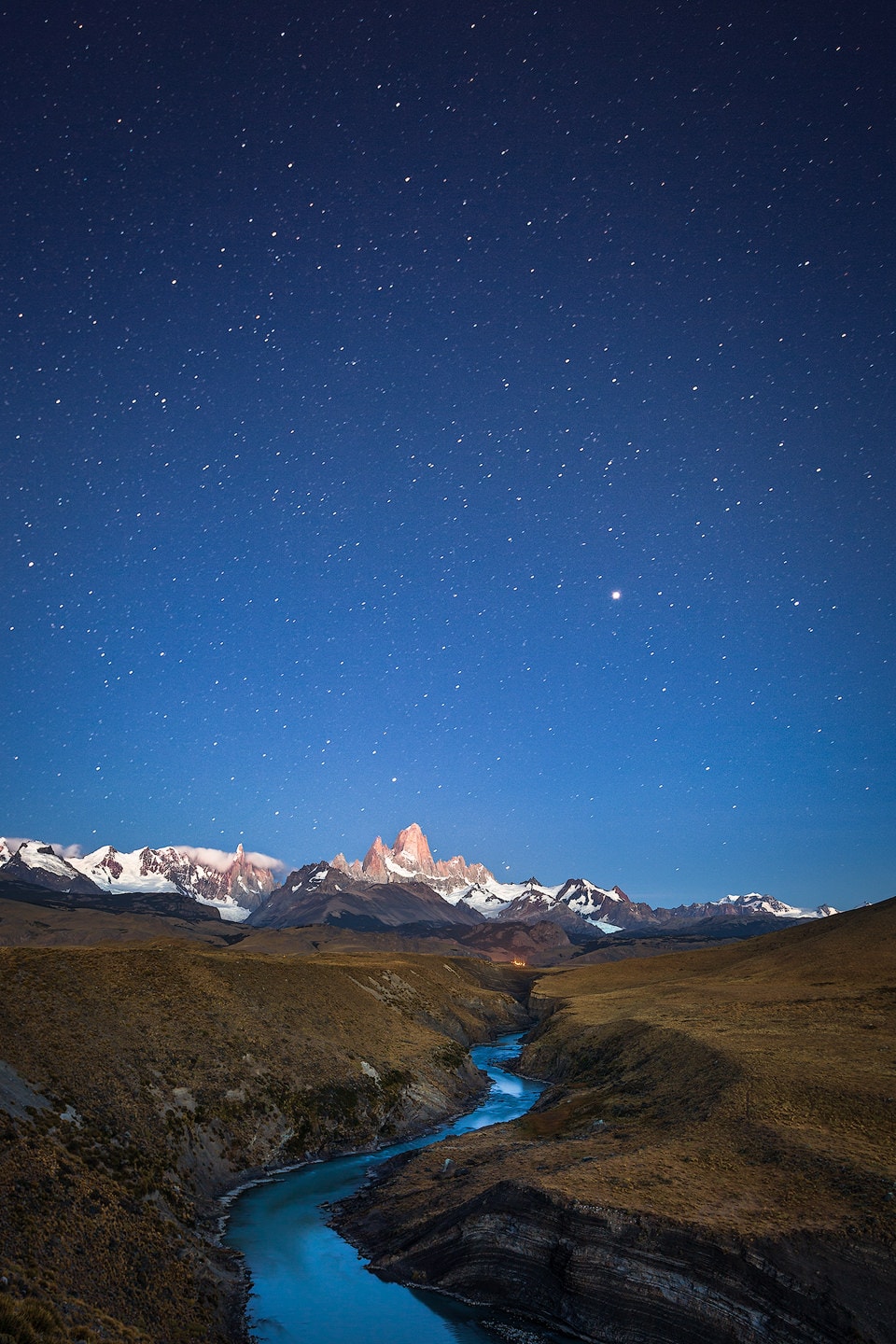
But I’d thought about it before the trip. If the skies were genuinely clear — clear enough to offer nothing during the day — the southern hemisphere would give me something else at night. Stars. I had never tried serious night photography, but the idea had been forming for months: the Fitz Roy massif under a starlit sky, foreground detail still visible in the twilight, the whole scene blended from separate exposures. That evening I explored the road north of town, found a viewpoint above the Rio de las Vueltas canyon, and left my tripod where I could find it in the dark. Then I set an alarm for a few hours later.
The Rio de las Vueltas
We left the hostel quietly and drove past the last street lamp of El Chaltén. After a short drive we pulled off the road and walked. Tussock grass underfoot, the dry crack of gravel, calafate bushes catching at my legs with their thorns. No torch — I wanted to keep my eyes adjusted to the dark. I knew the direction. The tripod was where I’d left it.
The canyon opened below us. This is something no photograph of the place prepares you for. The Rio de las Vueltas has cut a wide, deep channel through the steppe — not a dramatic gorge, but deep enough that you feel the gap. You stand at its edge and look across, and the mountains on the other side feel farther and larger than they do from town. The steppe, the canyon, the range, the sky — everything stacks in layers from your feet to the top of the frame.
The river ran pale at the bottom of the canyon. Beyond it, the entire Fitz Roy Range stood against the stars — Fitz Roy in the centre, Cerro Torre to the left, the full line of peaks and spires between them. The last twilight still held enough warmth to light the granite — pink against deep blue. Below the mountains, a faint glow: El Chaltén, the entire town reduced to a handful of points. And slightly right of centre, brighter than anything else in the sky, Mars.
I clamped the camera onto the tripod, set focus, checked the settings. Three exposures — one for the sky, one for the mountains, one for the canyon. The final image is a blend of all three.
What Clear Skies Give
The weather in Patagonia is so central to how light shapes the landscape that clear skies feel like a problem to solve. No clouds, no drama, no colour at the horizon — nothing for the camera to catch.
But clear skies are not empty. On a cloudless night in the southern hemisphere, the sky fills with more stars than most photographers from the northern latitudes have ever seen. The atmosphere is clean and in a place like El Chaltén — where the nearest city light is hundreds of kilometres away — the darkness is deep enough to work in.
That night was the first time I tried it seriously. It would not be the last — night photography of Cerro Torre in particular became something I returned to again and again, and the night hours in Patagonia opened a register I hadn’t known the place had. But this was the beginning. The image that showed me the mountains could hold a different sky entirely — no clouds, no sunset, just stars and the last trace of twilight — and still give everything.
The whole range standing in a line. Watching over the valley and the town below them. Silent, and entirely themselves.
Have you ever tried something new with your camera out of necessity — and found it opened a door you didn’t expect? I’d love to hear your story.
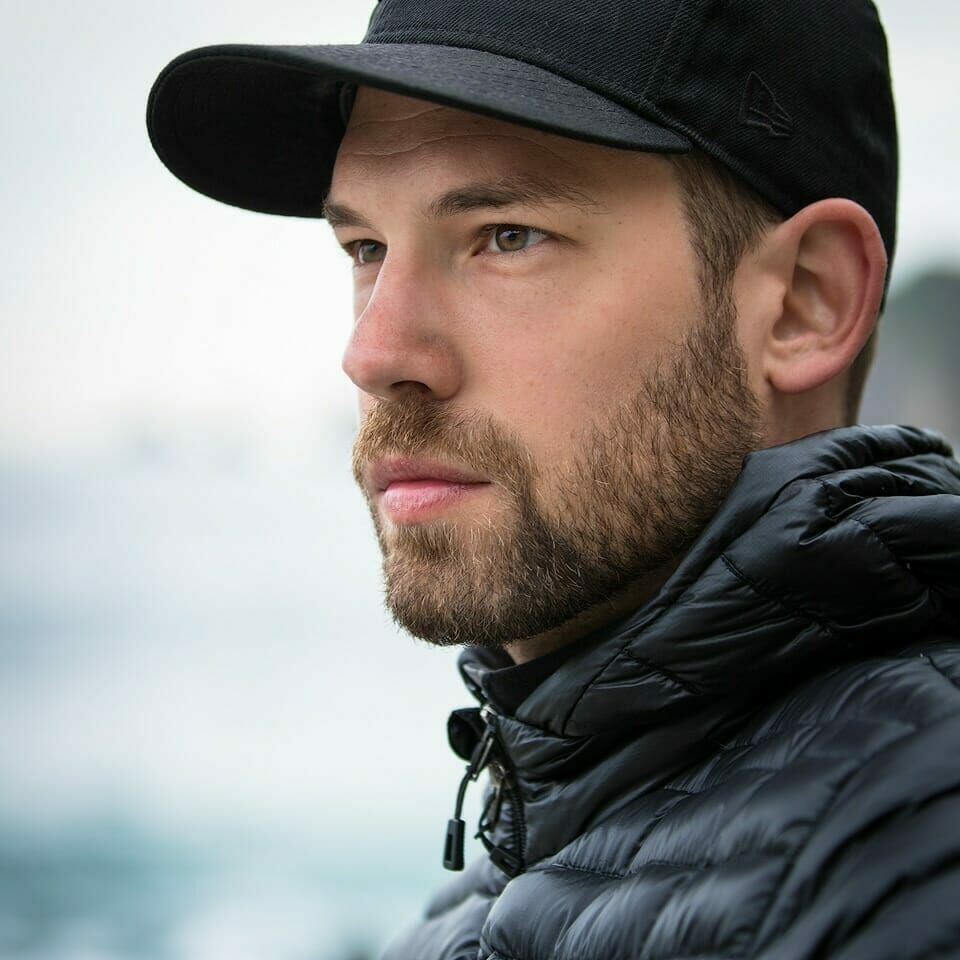
Landscape photographer
Vienna, Austria
Have you any more from Patagonia.
Incidentally I spent 6 months in El Chalten. There's a few of mine here:
http://www.waddingtonphoto.com
there’s a lot more from Patagonia here on my blog. check out this link: https://www.joergbonner.net/places/south-america/patagonia/
had a look at your’s, too – seems like you had productive 6 months down there ????