
Location & History
Fitz Roy, one of the many beautiful peaks in the southern Patagonian Andes, is an impressive mountain with an altitude of 3.128m. It is the most widely visible peak of the surrounding Cordillera and its unique shape can be seen from more than a 100 kilometers away. Fitz Roy’s vertical walls have been attracting adventurers and climbers ever since its discovery. In the early days getting close to the mountain was and adventure itself. Nowadays El Chaltén, a small and friendly town from where you can trek to the foot of Fitz Roy within a few hours, serves as a comfortable hub for tourists and climbers.
The first written description of Fitz Roy was made in the year 1782, by spanish explorer Antonio de Viedma, who spotted the mountain from the shores of a lake nearby later called Lago Viedma. Antonio de Viedma was not the first human to lay his eyes on the peak though. Southern Patagonia and the vast plains east of Fitz Roy had been inhabited by the native nomad tribes of the Aonikenk (or Tehuelche) for centuries. The native name for Fitz Roy – a sacred mountain in the spiritual world of the Aonikenk – was “Chaltén” which translates to “smoking mountain”, and obviously was a reference to the clouds often hovering above the peak. In 1877 Francisco “Perito” Moreno, the famous explorer and geographer, named the mountain after Robert FitzRoy the captain of the HMS Beagle the ship that Charles Darwin used for his famous exploratio of the world.
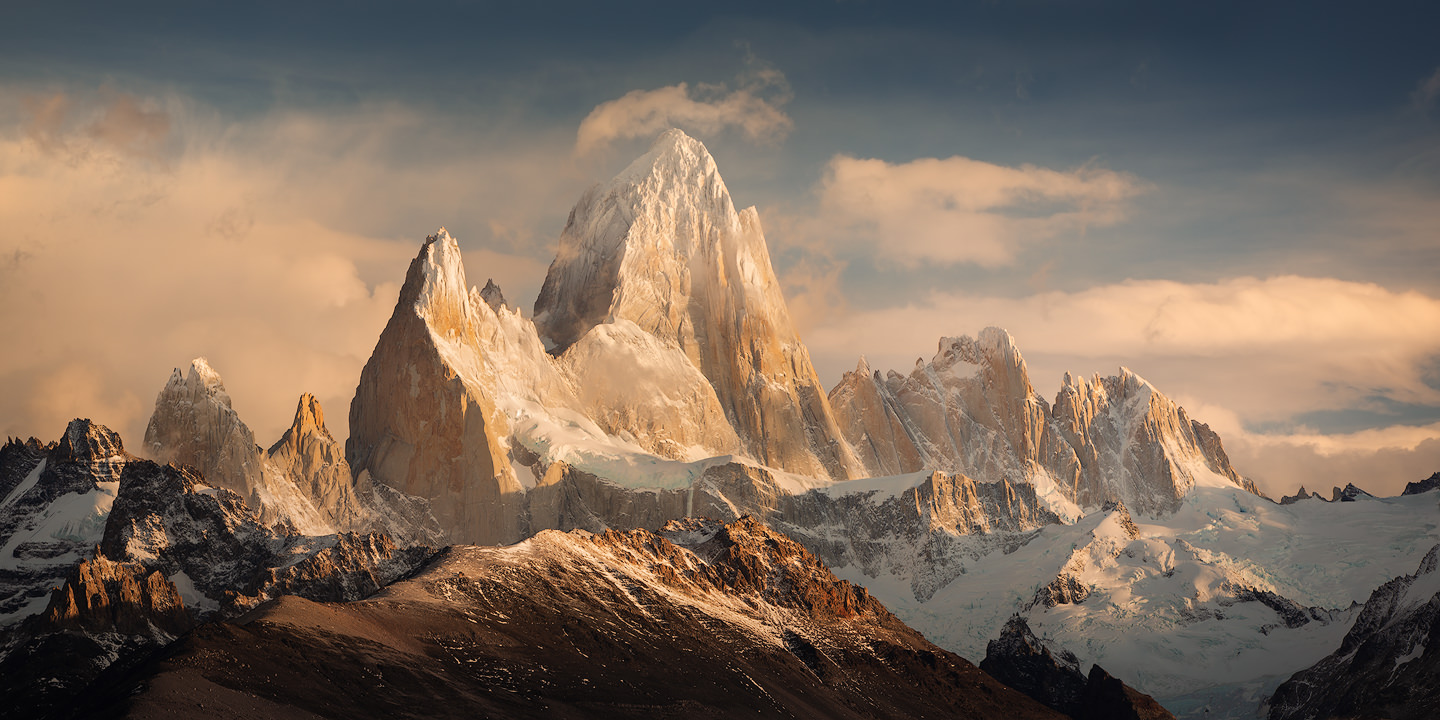
Fitz Roy is located in Parque Nacional los Glaciares in Patagonia where it stands among other famous patagonian peaks like Cerro Torre. The peak is the most prominent of the so called Fitz Roy Group, a chain of summits connected via a ridge line. Other notable peaks of the Fitz Roy Group are (from South to North) Aguja Saint-Exupéry, Aguja Poincenot, Aguja Mermoz and Aguja Guillaumet. Fitz Roy’s impressive east face can be seen from almost anywhere in the national park and many tourists make it up all the way to Laguna de los Tres, a small lake almost directly below Fitz Roy’s walls. Seeing Fitz Roy’s West face is a privilege reserved to the more experienced and adventurous, venturing it deeper into the park.

Fitz Roy
Quick Info Panel
Here you can find all you need to know about Fitz Roy. See below to learn the most important facts, check it out on a map and view an image gallery. Scroll down even further for travel advice and more photography.
Facts
- Height: 3.405m / 11.171ft
- Mountain Range: Andes
- First Ascent: 1952
Location
- Country: Argentina
- Nearest Town: El Chaltén
- Nearest Airport: El Calafate (FTE)
Fitz Roy
On the Map
- GPS: 49° 16' 12.2772'' S / 73° 2' 33.5508'' W
- Lat/Long: -49.270077, -73.042653
Additional Information:
Hiking around Fitz Roy
The most iconic route is the hike to Laguna de los Tres — roughly 20 kilometres and 1,200 metres of elevation gain, culminating at a high alpine lake positioned directly beneath Fitz Roy’s east face. The final push to the lake is steep and exposed, but the panorama at the top is one of the most dramatic mountain views in South America. A second major route heads west to Laguna Torre, with views of Cerro Torre and the southern icefields. Both trails begin at the trailheads just north of El Chaltén and are well-marked. They can be combined in a long day or split across two.
Access requires no permits as of writing, but checking in at the ranger station before heading out is strongly recommended. Trail conditions, river crossings, and weather windows are updated regularly and can change quickly. Camping is available at several designated sites within the park — including Poincenot and De Agostini near Laguna de los Tres — for those who want to extend their stay and be in position for early light.
Weather & Wind
Patagonian weather is the defining condition of any experience here. Wind, cloud, and rain are the default — clear days are the exception, and Fitz Roy can vanish entirely for days at a time. The best window for visiting is November through March, the austral summer, when daylight is long, temperatures are somewhat more forgiving, and the chance of a clear window is at its highest. That said, Patagonia operates on its own schedule, and patience is as important as planning. Many photographers spend a week in El Chaltén waiting for a single clear morning. The ones who wait are usually rewarded.
Wind is a constant presence, particularly on the exposed ridge to Laguna de los Tres. Poles are useful, and anything lightweight should be secured. The reward for enduring the conditions is access to a landscape of extraordinary intensity — one that looks different in every kind of light, and spectacular in all of them.
Photographing Fitz Roy
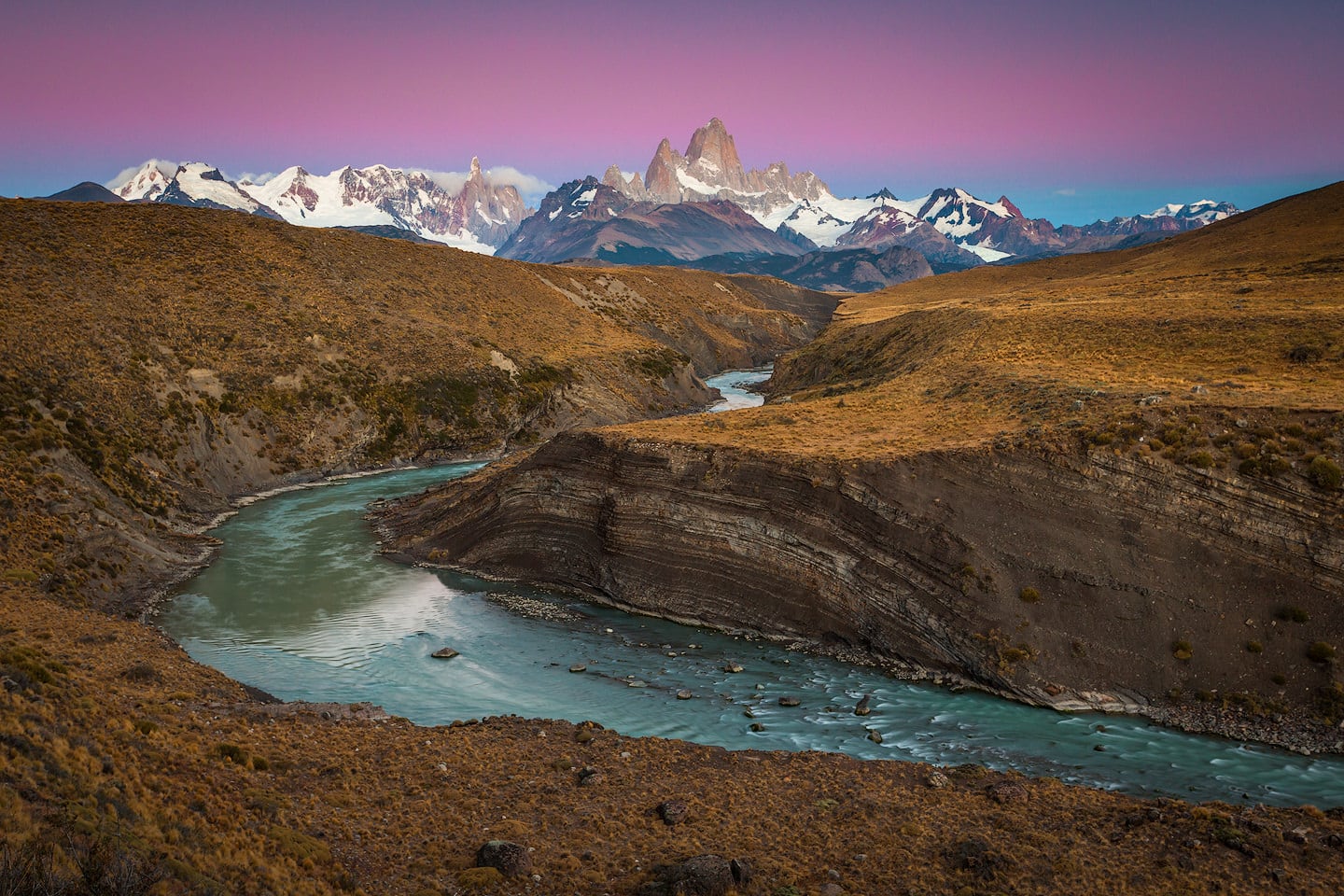
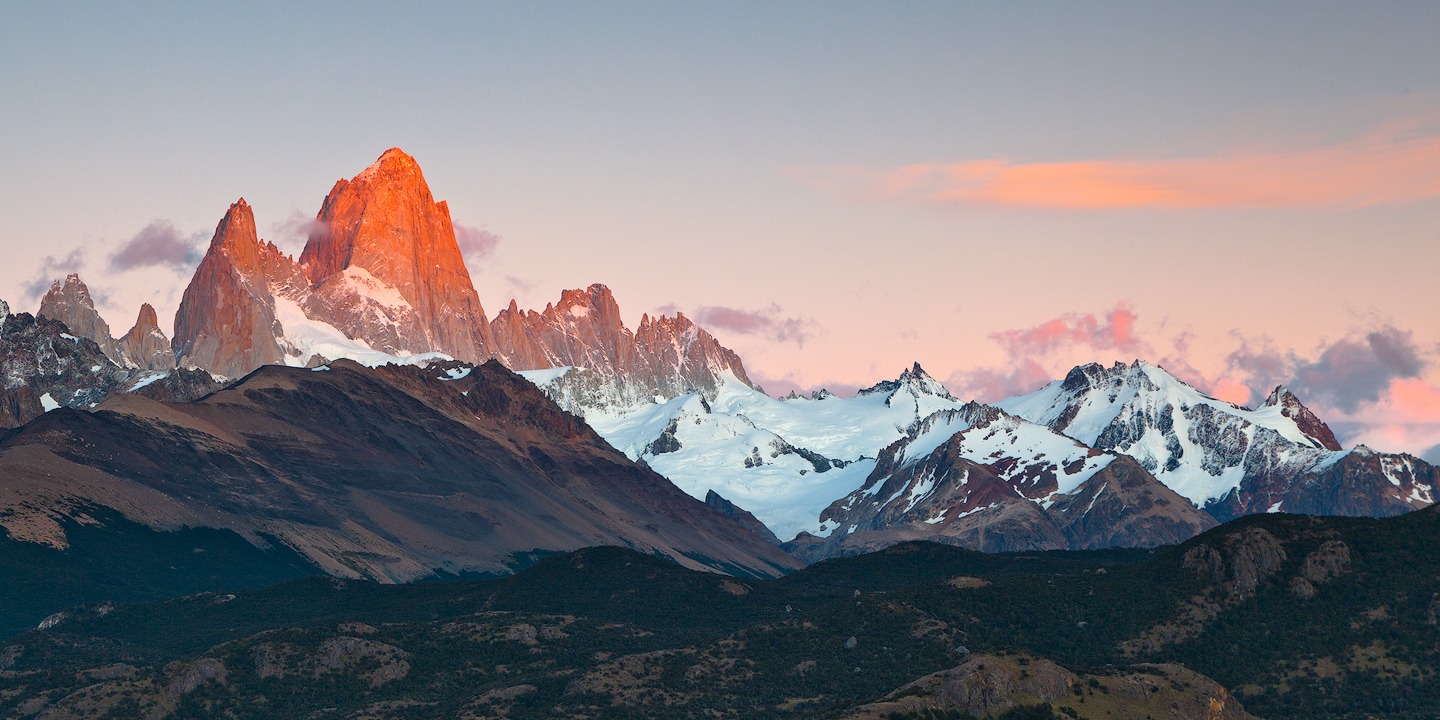
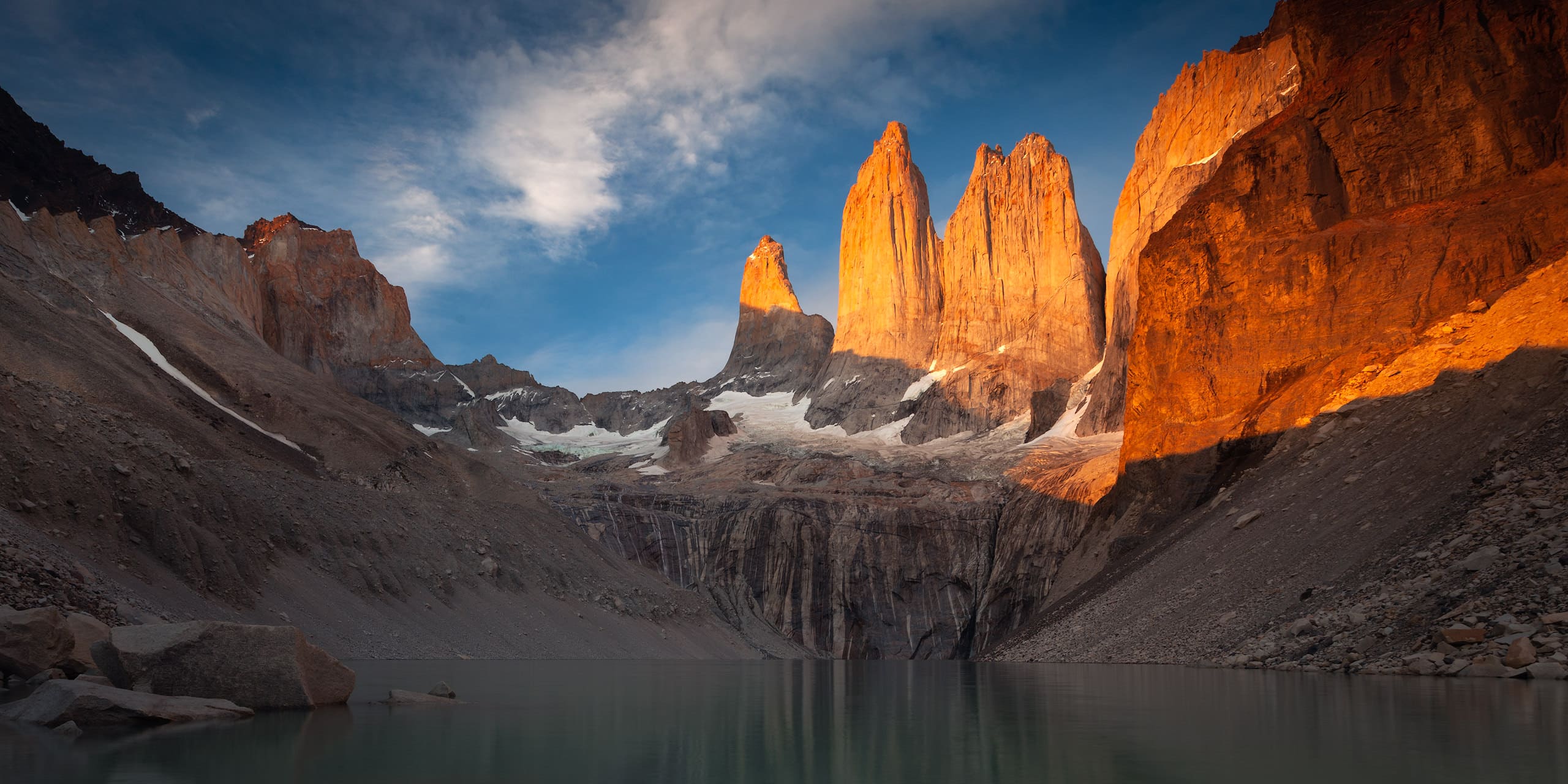
For those who come with a camera, Fitz Roy rewards every effort made to be in front of it early. The most sought-after light is the alpenglow at dawn — a few minutes when the granite towers turn amber and deep pink before the sun fully clears the horizon. It requires a pre-dawn start, often a 2–3 hour hike in darkness, and no guarantee that the clouds will part. When they do, the results can be extraordinary, as captured in this Fitz Roy winter sunrise from Parque Nacional Los Glaciares — a quiet, blue-toned image that conveys the stillness of waiting for Patagonian light at its most delicate.
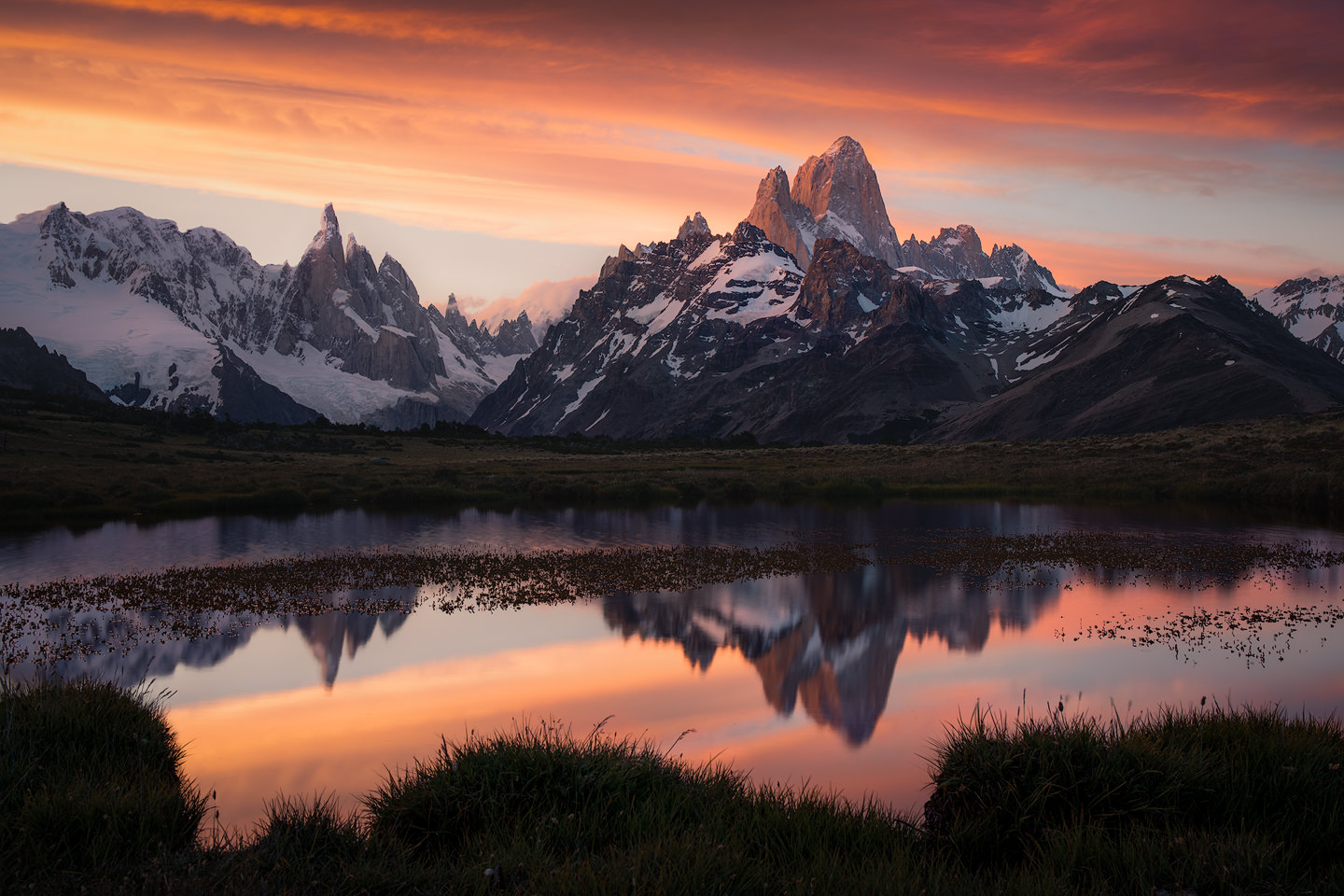
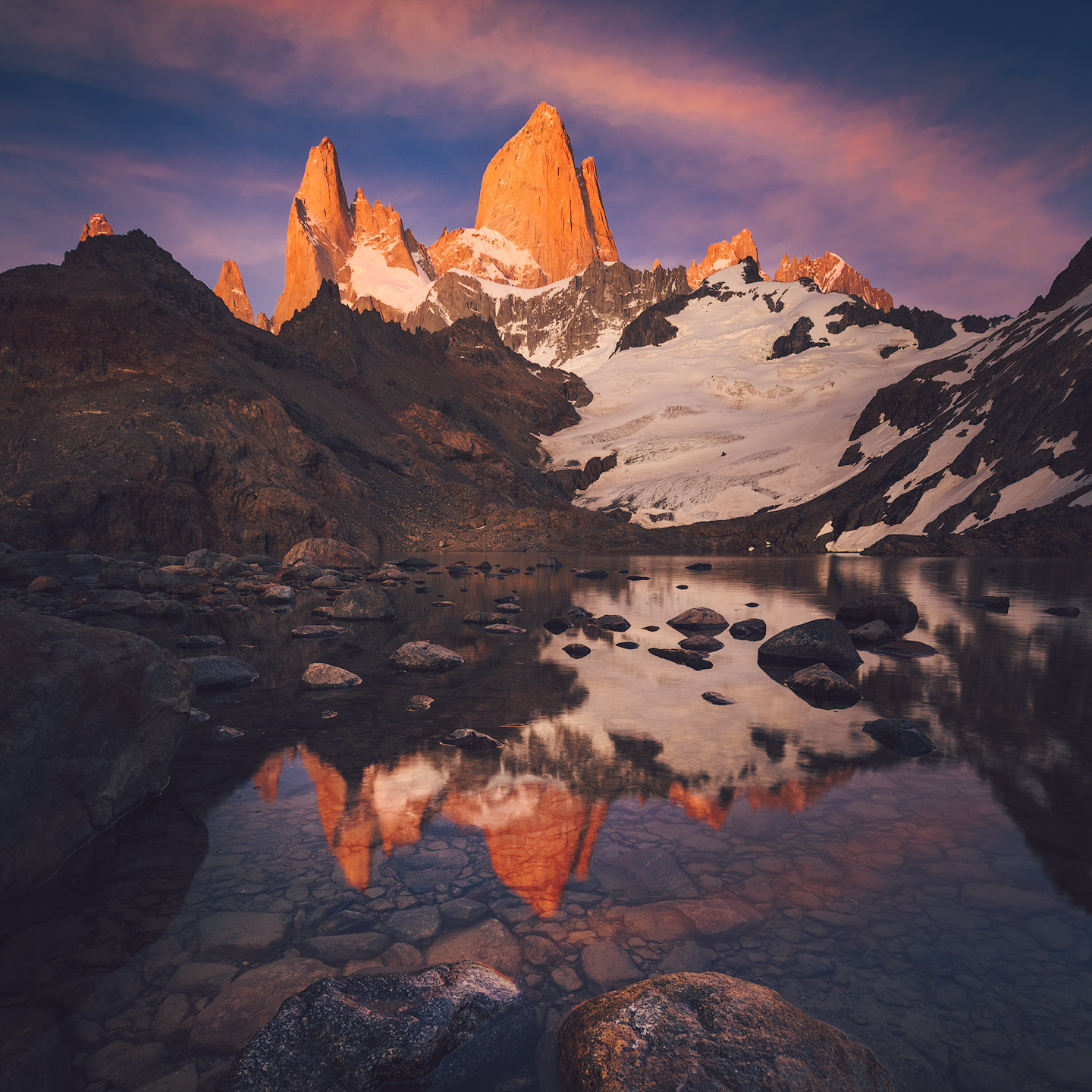
Laguna de los Tres is the primary foreground for most Fitz Roy compositions, but the mountain reflects in several lakes and rivers along the valley, each offering a different mood. On rare occasions the peaks align: here the reflected silhouetts of Fitz Roy and Cerro Torre are mirrored in still water — the kind of image that only happens when timing, weather, and position all come together at once.
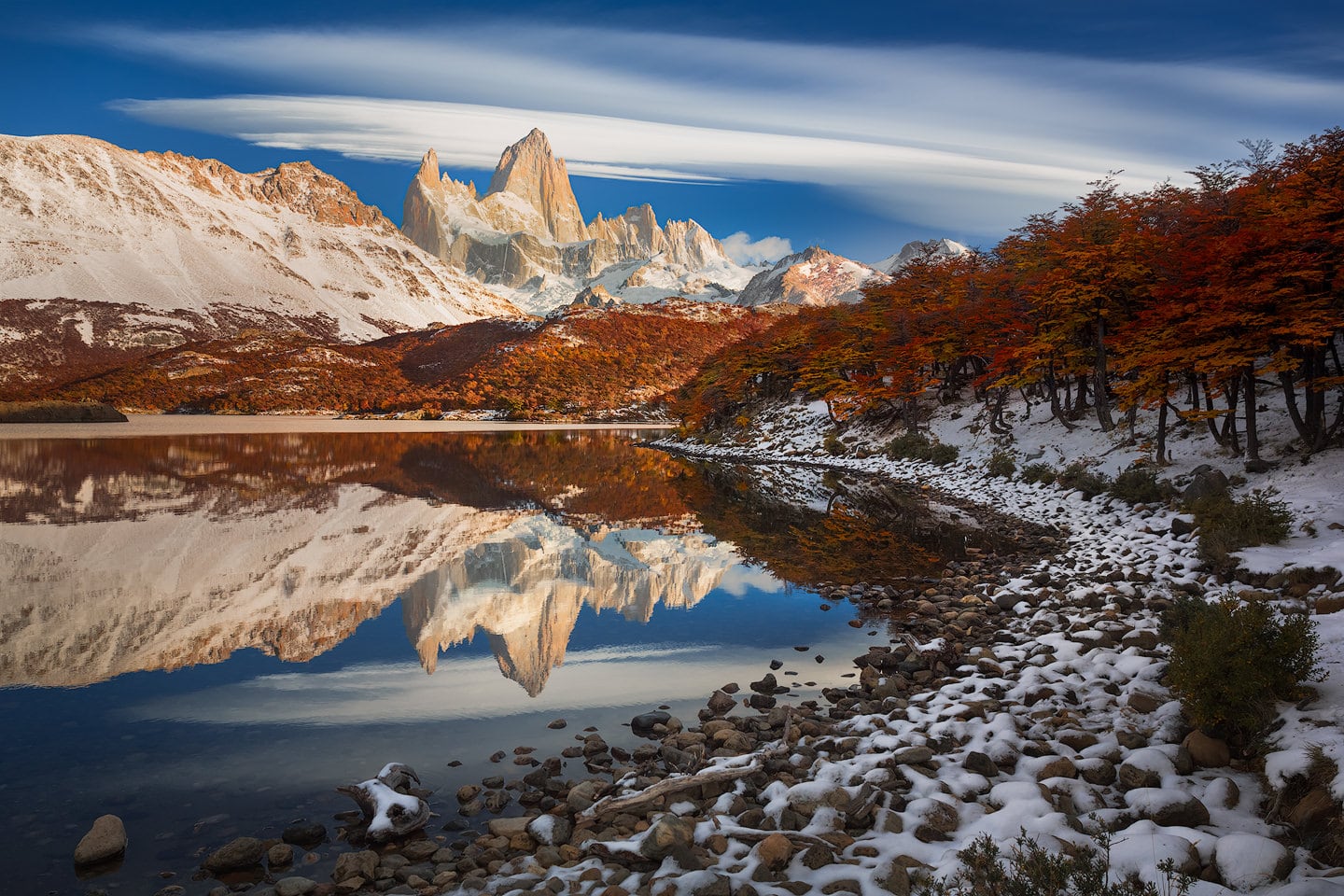
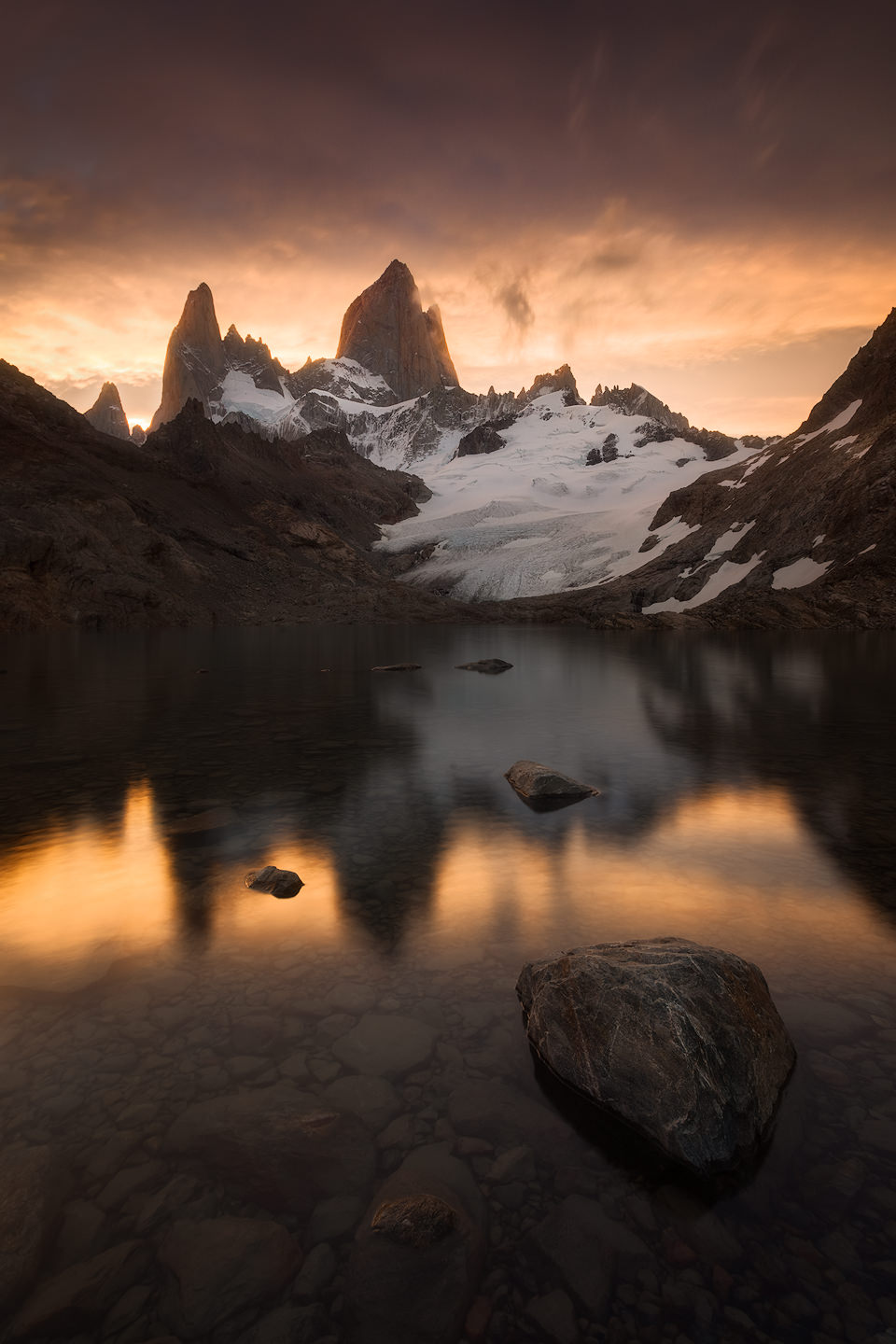
Returning to a place with better skills and a different eye can be just as rewarding as seeing it for the first time. This Laguna de los Tres sunset photograph revisits the classic viewpoint years later — the same composition, reworked with a clearer sense of what the light was actually doing. The mountain is the same. The photograph is entirely different.
Image Gallery
A picture says more than a thousand words they say – check out my image gallery below. These photos of Fitz Roy have been taken during my many stay in Parque Nacional Los Glaciares. Click on the images to open a lightbox.
On the Blog
If you want to read more about Fitz Roy and keep exploring the blog, you’ve come to the right place. Here’s a selection of related images, adventures and articles from my blog for you:
In Patagonia
Since I'm being treated to some decent internet connection these days I thought I'd give you a little update about my whereabouts... I'm reciding in Ushuaia at…
Merry Christmas 2015
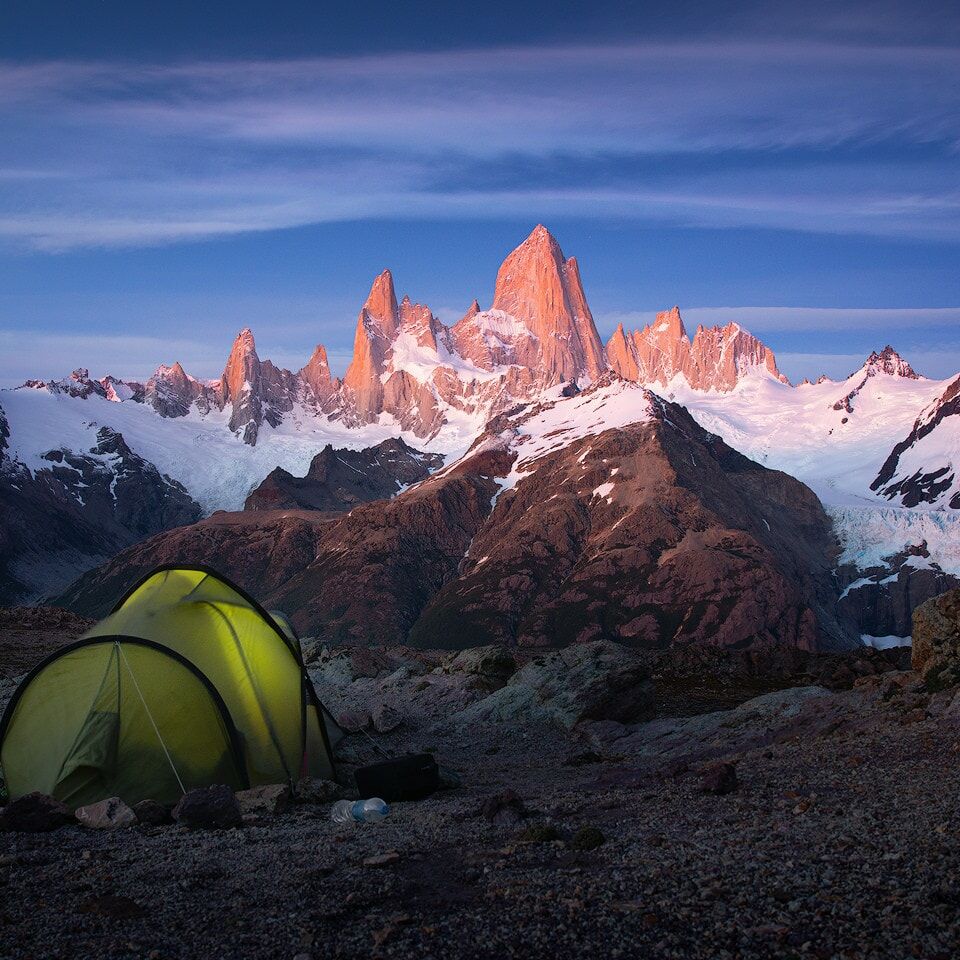
Merry X-Mas everyone!! I'm lucky enough to be celebrating in Patagonia this year. Here's a shot from last week. I'll post some updates next week - if internet…

Nothing found.
Nothing found.
Nothing found.